
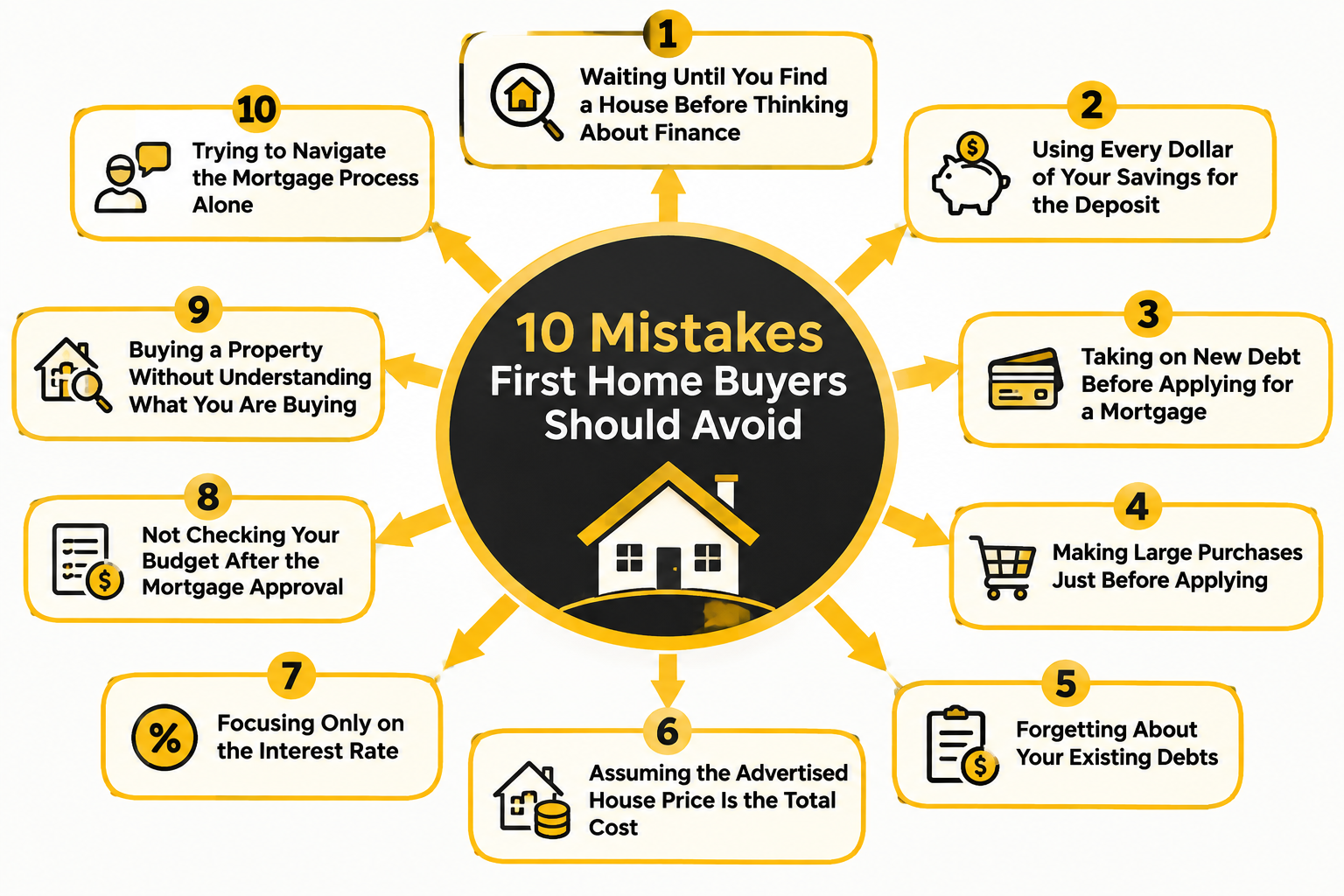

10 Mistakes First Home Buyers Should Avoid
From using every dollar of your savings to taking on new debt or overlooking property risks, preparation can make a real difference. Use this guide to understand some of the most common mistakes first home buyers should avoid
1. Waiting Until You Find a House Before Thinking About Finance
One of the biggest mistakes first home buyers make is starting their property search before understanding what they can realistically afford. Before seriously looking at properties, consider your deposit, income, existing debts, regular expenses and the mortgage repayments you could comfortably manage.
Understanding your borrowing position early can help you focus on a realistic price range and avoid falling in love with a property before you know whether the finance works.
2. Using Every Dollar of Your Savings for the Deposit
A larger deposit can be helpful, but putting every dollar you have into the property can leave you financially stretched after settlement. Buying a home can involve legal costs, insurance, moving expenses, property reports and unexpected repairs.

Think beyond the deposit: consider what money you will have available after settlement for unexpected costs and everyday life.
3. Taking on New Debt Before Applying for a Mortgage
Car finance, personal loans, credit cards, Buy Now Pay Later arrangements and other new commitments can affect your overall financial position. If buying a home is your priority, think carefully before taking on unnecessary new debt.
4. Making Large Purchases Just Before Applying
Large purchases can reduce your savings and change your normal spending pattern. This does not mean you cannot spend money while preparing to buy a home, but it is worth being conscious of your financial position when you are close to applying for finance.
5. Forgetting About Your Existing Debts
First home buyers sometimes focus heavily on their deposit while overlooking existing commitments such as student loans, credit cards, car finance, personal loans or store finance. Reviewing these commitments before starting the mortgage process can help you understand your overall position.
6. Assuming the Advertised House Price Is the Total Cost
A property’s purchase price is only part of the financial picture. Depending on the property, you may also need to budget for rates, insurance, maintenance, repairs, utilities and body corporate fees where applicable.
7. Focusing Only on the Interest Rate
A low rate can be attractive, but the lowest advertised rate is not necessarily the best mortgage option for every borrower. Mortgage structure, repayment flexibility, loan features and your future plans can also matter.
The goal is not simply to find the lowest rate — it is to find a mortgage option and structure that suit your circumstances.
8. Not Checking Your Budget After Mortgage Approval
There is a difference between how much you can borrow and how much you should borrow. Think about whether you can still manage savings, unexpected expenses, repairs and other financial goals after taking on the mortgage.
9. Buying a Property Without Understanding What You Are Buying
It is easy to become emotionally attached to a property, but it is important to understand the property before committing. Depending on the situation, consider building reports, LIM information, title information, maintenance requirements, insurance considerations, location and potential property risks.

Do your homework before committing. A mortgage adviser can assist with the finance side, while legal and property professionals can help with matters outside the scope of mortgage advice.
10. Trying to Navigate the Mortgage Process Alone
There are different lenders, loan structures, rates, lending criteria and application requirements to consider. Speaking with a mortgage adviser early can help you understand your options and prepare for the application process before you find a property.

How to Avoid These First Home Buyer Mistakes
Buying your first home does not have to be complicated, but preparation matters. Review your income, expenses, savings and debts. Understand how much deposit you have available, avoid unnecessary new commitments, and work out what mortgage repayments would be comfortable for your household.
Getting advice before you start making offers can help you understand your position and approach the property search with more confidence.
Frequently Asked Questions
Get Mortgage Advice Before You Make an Offer
Whether you are still saving your deposit, preparing to apply or ready to start house hunting, speak with a Mortgage Advisors broker about your options.

