


A practical guide to refinancing in New Zealand—from rates and switching costs to a repayment plan that fits your life.
What refinancing means
Refinancing means replacing your existing home loan with a new one. You may move to another lender or arrange a replacement loan with your current lender.
Refixing is different: it means choosing a new fixed interest rate when an existing fixed-rate period ends. Refinancing can involve a broader review of your lender, repayment term and loan structure.
Start by asking your current lender what it can offer, then compare that with suitable alternatives.
Why people refinance
Your mortgage should reflect your circumstances today. Homeowners may review their loan to pursue a more competitive rate, adjust repayments, gain flexibility or restructure borrowing.
Manage cash flow
Explore repayments that fit a changed household budget.
Repay sooner
Review a shorter term or a higher repayment amount.
Gain flexibility
Compare extra repayment rules and useful loan features.
Identify your main goal before comparing offers. A lower advertised rate alone does not show whether switching will leave you better off.
When to consider refinancing
The end of a fixed-rate period is a useful time to compare options. Allow time to gather documents, assess costs and arrange a new loan before your current rate expires.
Other review points include changes in income, expenses, savings or future plans. If you expect to sell, move overseas or make a large repayment, discuss this before entering another agreement.
If repayments are becoming difficult, contact your existing lender promptly. Refinancing involves a new assessment and may not be the right solution.
Compare more than the interest rate
Compare offers using the same loan balance, remaining repayment term and repayment frequency. A lower repayment may simply reflect a longer term.
| Compare | What to check |
|---|---|
| Interest rate | The actual rate offered and any eligibility conditions. |
| Fixed-rate period | How long the rate applies and what happens afterwards. |
| Repayment term | How many years remain until the debt is repaid. |
| Flexibility | Extra repayments, offset or revolving credit features, where available. |
| Total costs | Fees, incentive conditions and switching expenses. |
Fixed rates offer certainty for the agreed period. Flexible structures can suit some borrowers but require careful management. Do not assume today’s interest rate will apply throughout the mortgage.

Understand break costs
Repaying or moving a fixed-rate loan before its fixed period ends may trigger an early repayment cost, often called a break fee. It is separate from an administration or discharge fee.
Ask your lender for a written quote and confirm its expiry date. Break costs depend on your agreement and the lender’s calculation; they cannot reliably be estimated from advertised mortgage rates alone.Compare two dates. Ask what switching now would cost compared with waiting until the fixed period ends. If you have multiple loan portions, check each one.06
Allow for refinancing fees
Request an itemised estimate covering all applicable costs:
- Mortgage discharge and administration fees.
- Legal work to transfer the mortgage.
- Property valuation, if required.
- Application or establishment fees.
- Any disclosed adviser fee.
- Repayment of an earlier cash incentive.
Some lenders provide legal transfer services for eligible refinances, but exclusions apply. Confirm what is covered. If costs are added to the new loan, you will also pay interest on them.07
Changing lenders
A new lender will assess your application. An existing mortgage does not guarantee approval. Be ready to supply income evidence, employment information, bank statements, debt details and property information. A valuation may be required.
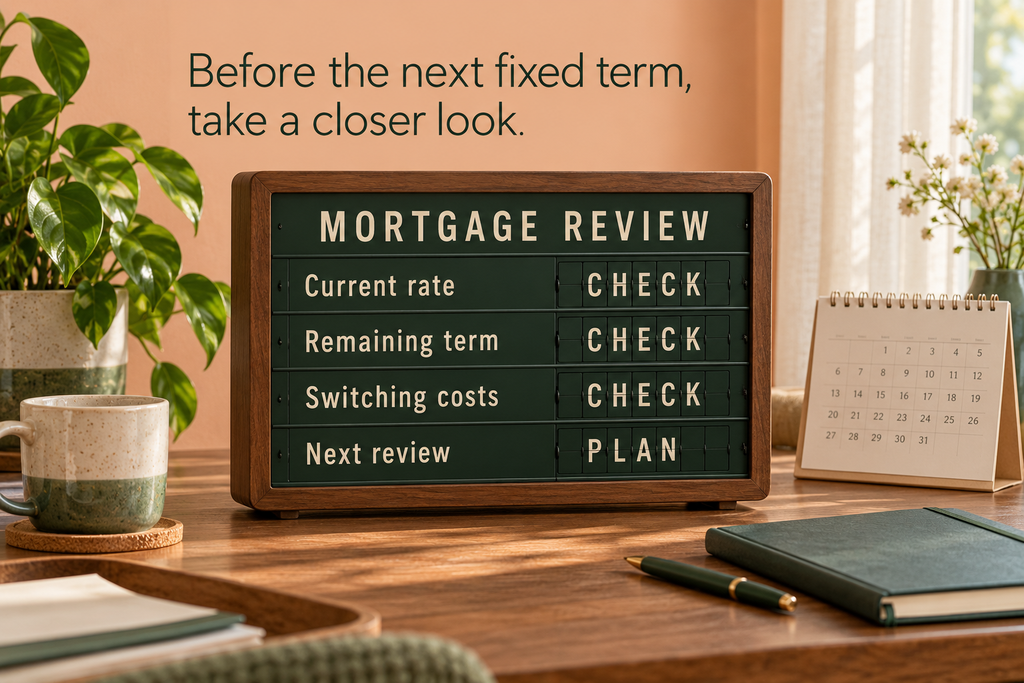
- Review your current loan, goals and switching costs.
- Compare suitable written offers.
- Apply and meet the new lender’s conditions.
- Review and sign loan and legal documents.
- Arrange settlement to repay the old loan and put the new mortgage in place.
Confirm settlement before changing repayment instructions. Check whether salary payments or everyday banking must move, and confirm your first new repayment date.

Cashback and incentives
A cashback offer can help cover switching expenses. Check eligibility, payment timing and any obligation to repay it if you leave early. Your previous cashback agreement may also require repayment.
Compare the incentive alongside the interest rate, fees, flexibility and loan term.ILLUSTRATION ONLY
If switching costs total $3,000 and cashback is $2,000, the initial net cost is $1,000. A $100 monthly repayment reduction would recover that initial cash cost in about ten months, assuming an otherwise comparable arrangement.
This is a cash-flow illustration, not a calculation of lifetime savings. Future rates, loan balances and incentive conditions can change the outcome.

Restructuring debt
Refinancing may provide an opportunity to review credit cards, car finance or personal loans alongside your mortgage. Consolidation can simplify repayments and may lower the interest rate.
However, spreading a short-term debt over a long mortgage term can increase its total interest cost. Adding unsecured debt to your mortgage also secures that borrowing against your home.
Ask for a total-cost comparison. Discuss keeping consolidated debt in a separate loan portion with a shorter repayment term, and plan how to avoid rebuilding the debts you have repaid.

Increasing or reducing the loan term
A longer term
Usually lowers required repayments at the same balance and rate, but generally increases total interest.
A shorter term
Usually increases repayments at the same balance and rate, but generally reduces total interest.
If you have 20 years remaining, compare the new offer over those same 20 years before considering a new 30-year term. This separates the effect of a rate change from the effect of extending the debt.
If a lower rate frees up money, ask how keeping your existing repayment amount could affect the payoff date. Check extra repayment limits and charges first.11
Is your home loan still working for you?
Talk through your current arrangement and refinancing options with Mortgage Advisors. Compare the costs, flexibility and repayment plan before deciding.

