


Applying for a personal loan can feel uncertain, especially when you need money for an important expense. You might wonder whether your income is enough, whether existing debts will affect your application, or whether a past missed payment could stand in your way.
Although no application comes with guaranteed approval, preparing before you apply can help you present a clearer picture of your finances. Start by understanding your ability to repay, your credit history and whether the proposed loan suits your needs.
What do lenders look at?
Lenders need to understand whether you can manage the proposed repayments alongside your existing commitments. The Financial Markets Authority explains that applicants may be asked about income, expenses, debts, personal circumstances and reasons for borrowing. Supporting documents and credit checks may also be required.
Your application is about more than your salary or credit score. A higher income does not necessarily make another repayment affordable if most of that income is already committed.
01 Check the starting criteria : Confirm your eligibility first
Before completing an application, check the lender’s requirements. These may cover minimum age, accepted residency or visa status, regular income, borrowing limits, acceptable purposes and identity verification.
Requirements differ between providers. ANZ, for example, publishes criteria covering regular income, money remaining after expenses, identification and specified residency or work visa requirements. Another lender may apply different rules.
If you hold a temporary visa, ask whether your visa type and remaining duration are acceptable before applying. Checking eligibility early can help you avoid an application that does not meet the provider’s starting criteria.
02 Know your credit: Review your credit report
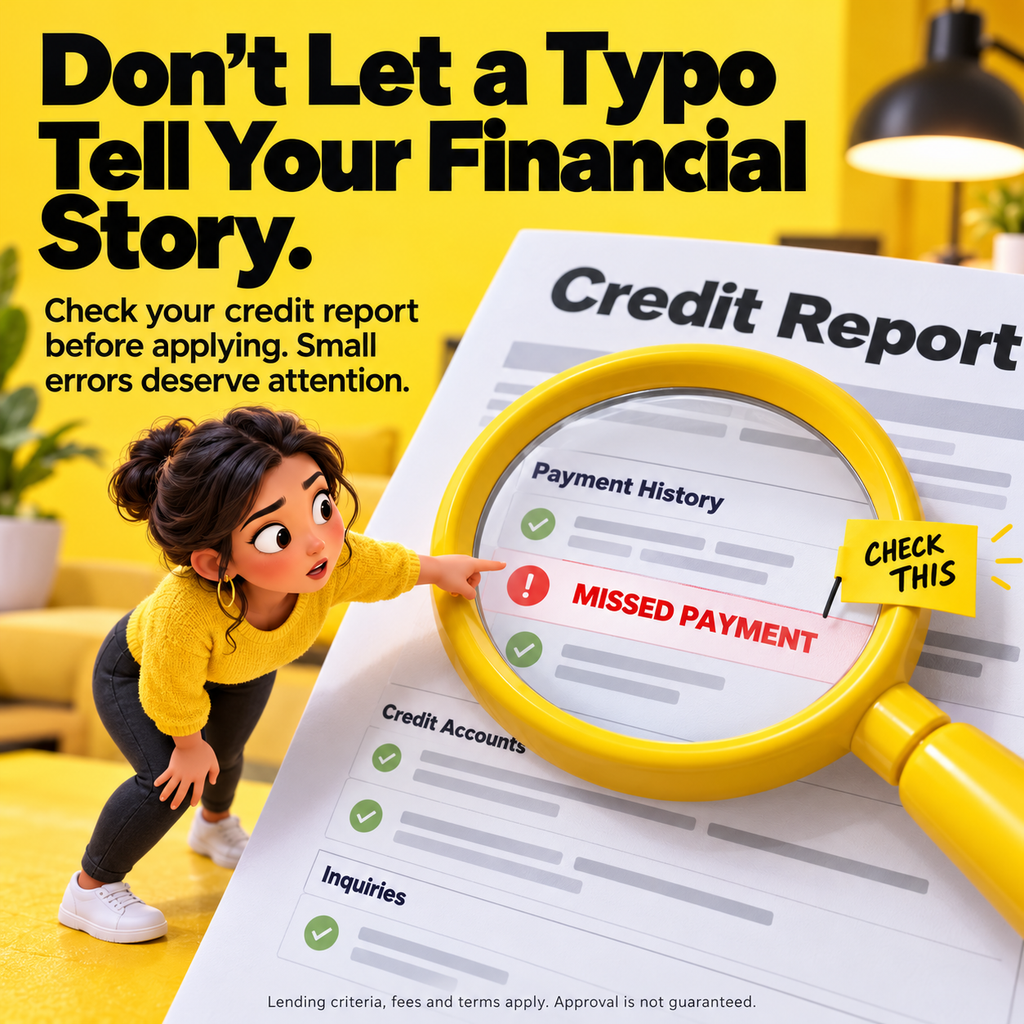
Your credit report helps lenders understand how you have managed borrowing and payments. Review it before applying, particularly if you have missed repayments, settled overdue accounts or noticed unfamiliar credit activity.
Look for incorrect account information, unfamiliar applications and payments recorded inaccurately. Request corrections for errors and keep supporting documents. Checking early gives you time to investigate problems.
Correcting an error is different from removing accurate negative information. Paying a debt does not automatically erase its history, and improvements can take time.
03 Choose a realistic amount : Borrow for a clear purpose
Start with the actual cost of what you need. If an essential expense costs $5,000, adding several thousand dollars for optional purchases increases the debt you need to repay.
Consider any savings you can comfortably contribute, associated loan fees and whether part of the purchase can wait. A smaller amount may make repayments easier to manage, but it does not automatically mean approval.
A repayment calculator can help you plan. Its result is an estimate, not confirmation that a lender will approve the amount or offer the illustrated rate.
04 Leave breathing room: Build a realistic repayment budget
Use take-home income and actual spending to work out what remains after housing, groceries, transport, utilities, insurance, childcare and existing debts. Include less frequent costs such as vehicle servicing, school costs and annual premiums.
| Budget item | Amount |
|---|---|
| Take-home income | $1,200 |
| Living expenses | −$850 |
| Existing debt repayments | −$150 |
| Remaining before a new loan | $200 |
| Proposed loan repayment | −$90 |
| Remaining afterwards | $110 |
The remaining $110 must cover anything excluded from the budget, including unexpected costs. This is a household planning example, not a lender’s affordability calculation.

05 Make income easy to understand : Show consistent, verifiable earnings
Lenders need evidence of the income available for repayments. BNZ says it considers income consistency, employment history and whether applicants are permanently employed, contracting or self-employed.
If your earnings vary, organise records that show the pattern rather than relying on your highest recent payday. Separate usual earnings from occasional overtime, bonuses and one-off payments.
Ask what evidence is needed for your circumstances. Being self-employed or working irregular hours does not produce the same outcome with every lender.
06 Have your paperwork ready: Prepare complete documents
Missing information can slow an application. Depending on the provider, requested documents may include current identification, payslips, bank statements, employment information, existing debt statements, address evidence and relevant visa details.
Self-employed applicants should ask whether tax returns, financial statements or other income records are needed. Supply the period requested by the lender rather than assuming a universal requirement applies.
Provide clear, complete records. If a statement includes an unusual transaction, prepare a factual explanation with evidence where available. Never alter documents or omit commitments to make your application appear stronger.

07 Look at the whole picture: Review existing debts and BNPL
List your personal loans, car finance, credit cards, overdrafts, store finance and Buy Now, Pay Later arrangements. Record each balance, repayment amount and payment date to see which commitments compete for your income.
Where affordable, reducing balances may improve your position. Avoid using every dollar of savings if that would leave essential expenses uncovered. Borrowing elsewhere simply to move debt out of view does not necessarily improve affordability.

08 Keep payments under control: Manage bills and bank accounts
Set reminders or automatic payments and make sure enough money is available when payments fall due. Review subscriptions and payment dates if your account regularly becomes short before payday.
BNZ says account management, including occasions when an account has been overdrawn, forms part of its assessment. Address payment problems promptly and keep records of arrangements or settlements.
The aim is a budget you can maintain throughout the loan term, rather than temporarily changing transactions before applying.
09 Apply thoughtfully : Avoid a rush of applications
Multiple applications over a short period can create additional credit enquiries. Consumer Protection identifies frequent applications and checks as factors that can negatively affect a credit score.
Research eligibility and compare published information first. Ask whether an initial quote or eligibility check involves a credit enquiry and could affect your record. Providers do not all use the same process.
If declined, understand the reason before immediately applying again.
10 Compare the complete cost: Look beyond the repayment
Compare interest rates, establishment fees, ongoing charges, repayment frequency, total amount repayable and conditions for extra or early repayments.
A longer term may lower each repayment while increasing total interest. If security is required, understand which asset is involved and what could happen if you cannot repay.
A useful question: “What will I repay in total, including interest and fees, if I follow this repayment schedule?”
11 Be specific: Explain what the loan is for
A clear purpose helps a lender understand your request. For example, describe a specific vehicle repair supported by a quote, rather than asking only for “extra funds”.
New Zealand responsible lending requirements include assessing whether borrowing meets your needs and is affordable. Be accurate about the purpose and amount requested.
12 Consolidate carefully : Check whether consolidation helps
Debt consolidation combines eligible debts into a new loan. It can simplify repayments, but compare the new arrangement with what you would otherwise pay.
Check the rate, fees, term and total repayments. Consider how close existing loans are to being repaid. A lower regular repayment does not necessarily mean a lower overall cost.
Obtain current balances or settlement figures and plan how to avoid rebuilding cleared balances. Consolidation changes how you repay debt; it does not remove the debt itself.
If your personal loan is declined
Pause and review your position before submitting another application. Ask the lender for the main reason where it can be provided.
Your next step may involve correcting information, supplying evidence, reducing the requested amount or allowing time for your finances to improve.
If existing repayments are already difficult, contact your creditors about support before adding another commitment. Approval elsewhere may not help if the available loan makes your budget harder to manage.A little more clarity
Common questions
1. What credit score do I need for a personal loan in NZ?
There is no single score that guarantees approval across all lenders. Credit information is one part of an assessment that also considers affordability and provider-specific requirements.
2. Can I apply if I am self-employed?
It may be possible, depending on the lender and your circumstances. Ask which income records are required and provide documents that explain your earnings clearly.
3.Will paying off debt guarantee approval?
No. Reducing debt may help, but lenders still assess income, expenses, credit history and other relevant factors.
4.Does pre-approval guarantee the money?
Check the wording carefully. An initial indication or conditional approval may still depend on verification, documents and other requirements.
5.How long should I wait before applying again?
There is no universal waiting period. Address the reason for the decline and establish what has meaningfully changed before applying again.
Your loan-ready checklist
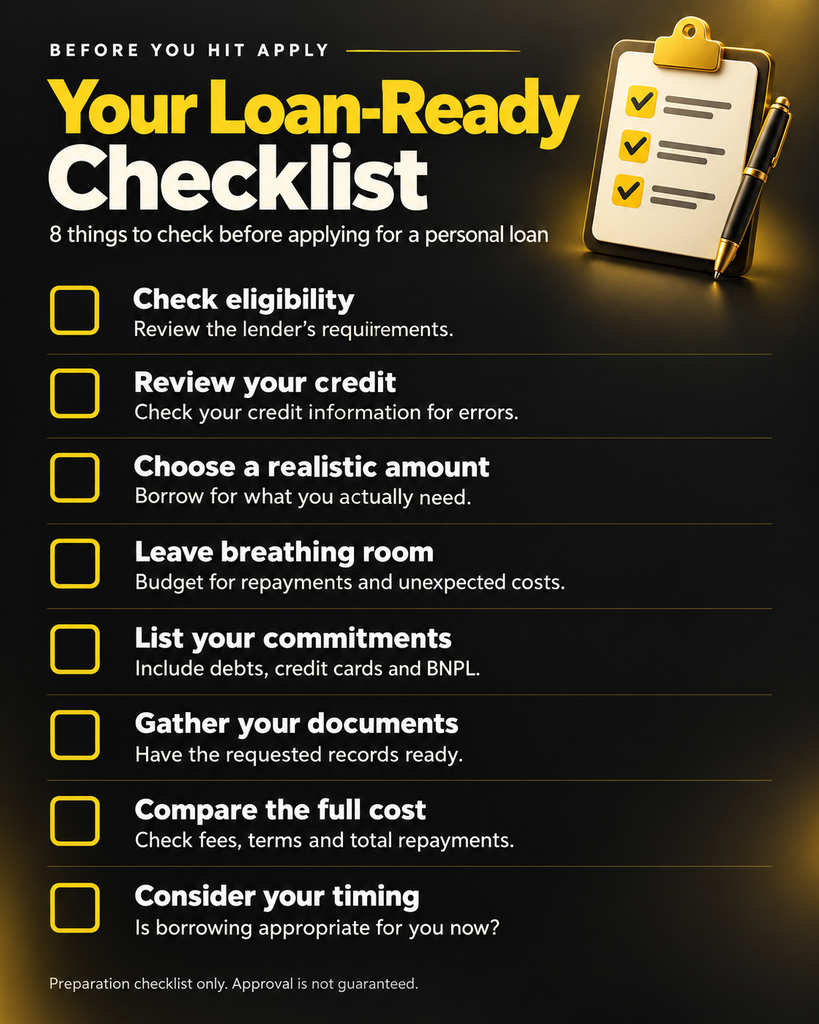
I have checked the lender’s eligibility requirements.I have reviewed my credit information.I have chosen a realistic borrowing amount.I have prepared a budget with breathing room.I have listed all existing commitments.I have gathered the requested documents.I have compared fees, terms and total repayments.I have considered whether borrowing is appropriate now.
A clearer application starts with a clearer picture.
Understand your budget, organise your records and discuss your circumstances with your chosen provider before applying.
Talk to Mortgage Advisors
Not sure whether you are eligible? Speak with a Mortgage Advisors broker about your circumstances, documents and available options.

