


A practical guide to the requirements, documents, benefits and risks, with clear steps to prepare your application.
A business loan can help you buy equipment, purchase stock, manage a temporary cash gap or expand your business.
Before applying, explain three things clearly: how much you need, what it will fund and how you will repay it.
01 / UNDERSTAND YOUR OPTIONS
What type of business finance do you need?
Different expenses may need different types of finance. Match the product and repayment period to the purpose. Buying equipment that will be used for several years is different from covering a short delay in customer payments.
| Finance type | Common purpose |
|---|---|
| Business term loan | Borrow a set amount and repay over an agreed period. |
| Business overdraft | Manage short-term cash gaps through an approved account limit. |
| Asset finance | Buy a particular asset, such as machinery or a work vehicle. |
| Invoice finance | Access funding against eligible unpaid customer invoices. |
02 / CHECK YOUR POSITION
Can your business qualify?
There is no single eligibility rule for every business loan in New Zealand. Requirements depend on the lender, product, amount, industry and business history.
- Business details: Who owns the business and who is authorised to borrow.
- Trading history: How long the business has operated.
- Financial performance: Sales, expenses, profit and existing debt.
- Repayment ability: Whether cash will be available when payments are due.
- Credit history: The business record and, where relevant, the owners’ records.
- Loan purpose: What you intend to buy or fund.
- Security or guarantees: What the lender requires if the loan is not repaid.
What if the business is new?
A new business has less trading history to support its application. You may need a stronger plan, realistic forecasts, relevant experience and evidence of your own contribution. Some lenders offer start-up lending, but approval is still subject to their assessment.
Do not assume every lender requires the same turnover or number of years in business. Ask about the particular product before applying.
03 / WEIGH IT UP
Benefits and limitations
What a suitable loan can help with
- Buy equipment needed for work.
- Fund stock or capacity for a specific growth plan.
- Manage an identified, temporary cash gap.
- Spread a purchase cost over an agreed period.
Borrowing does not guarantee higher sales or profits. The benefit depends on the purpose, costs and repayment plan.
What you need to understand
- Repayments continue during quiet trading periods.
- Interest and fees increase the total cost.
- Assets offered as security may be at risk.
- Personal guarantees can make you responsible for company debt.
- Reporting requirements and other conditions may apply.
Before signing: ask a lawyer to explain security and personal guarantees. Do not assume “unsecured” means no personal guarantee.
04 / GET READY
Prepare before applying
Update your accounts
Bring your bookkeeping up to date and reconcile it with bank activity. Separate business and personal transactions clearly. Explain unusual payments.
Review existing commitments
List loans, overdrafts, leases, credit cards and tax payment arrangements. Record balances, limits, repayments and due dates.
Write a short business plan
- What the business does and who its customers are.
- How it earns money.
- What the loan will fund and how that helps.
- How the borrowing will be repaid.
- What happens if results are weaker than expected.
Prepare a cash-flow forecast
Estimate money coming in and going out each month. Include realistic customer payment dates, operating costs, tax, owner drawings and the proposed repayments. Explain the assumptions behind your figures.
A forecast should show when cash is available, not just when you expect to make a sale.
05 / DOCUMENT CHECKLIST
What documents do you need?
Ask your lender for its checklist first. These are common preparation categories; the documents and reporting periods vary.
Identity and business information
- Photo ID and address details for relevant owners, directors or guarantors.
- Business name, trading address and contact details.
- NZBN, company number and IRD details, where applicable.
- Ownership information and partnership or trust documents, if relevant.
Financial statements
- Profit and loss: income, expenses and profit or loss.
- Balance sheet: what the business owns and owes.
- Management accounts: updated figures since the last annual accounts.
- Cash-flow forecast: expected cash movements and repayment capacity.
Ask how much history is required and whether accounts must be accountant-prepared.Bank statements
Provide complete statements for the accounts and period requested. Some lenders accept financial data through an approved accounting-system connection.Tax information
The lender may request tax returns, GST returns, IRD statements or details of arrears and payment arrangements. GST returns do not show the same information as a profit and loss statement; one may not replace the other.Existing borrowing
Prepare balances, limits, repayment details and security information for current loans, overdrafts, asset finance and other obligations.Evidence of the loan purpose
- Equipment or vehicle quotes and supplier invoices.
- Customer contracts or confirmed orders.
- Business sale and purchase agreements or commercial leases.
- Relevant licences, franchise documents or consents.
Security and owner information
If required, provide asset details, valuations, insurance information and a personal statement of financial position showing assets and debts.
06 / YOUR APPLICATION PATHWAY
How to apply: step by step
01 Define the purpose
Write one clear sentence explaining why you need the money. For example: “We need finance to purchase equipment for confirmed customer work.”
Avoid saying only “we need extra cash”. Explain the underlying need and how the spending will hel

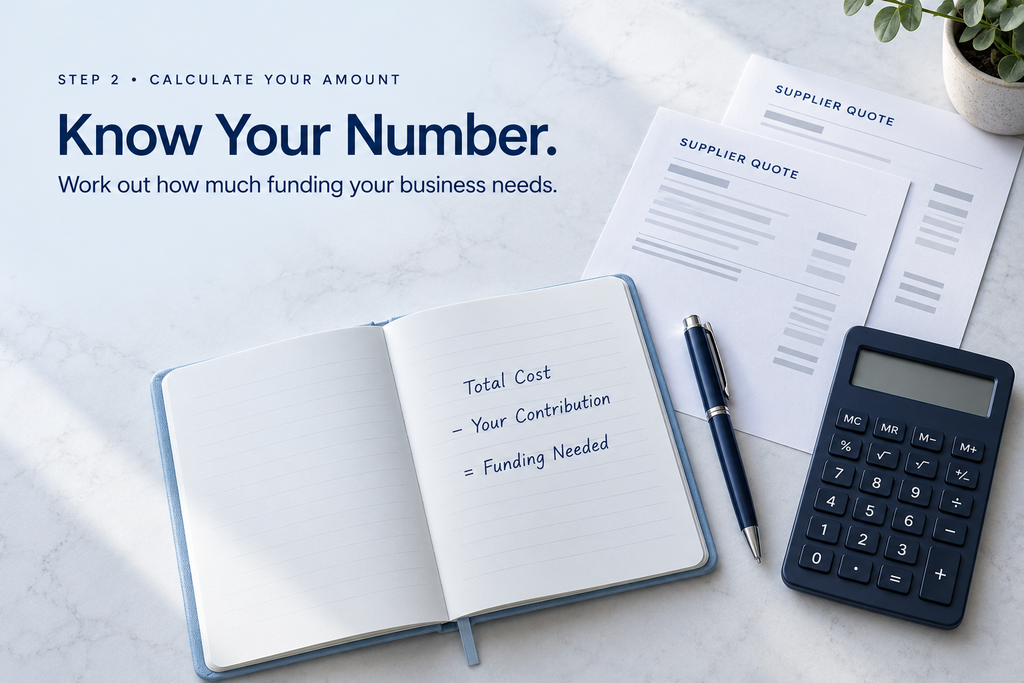
2. Calculate the amount
Use actual quotes and costs where possible. Identify what you can contribute without leaving the business short of operating cash.
Borrowing less may reduce repayments, but borrowing too little can leave a project unfinished.
3.Test repayment capacity
Add the proposed repayments to your cash-flow forecast. Check the effect of lower sales, late customer payments, higher costs or a project taking longer to generate income.
If the loan only works under your best-case forecast, review the plan before applying.

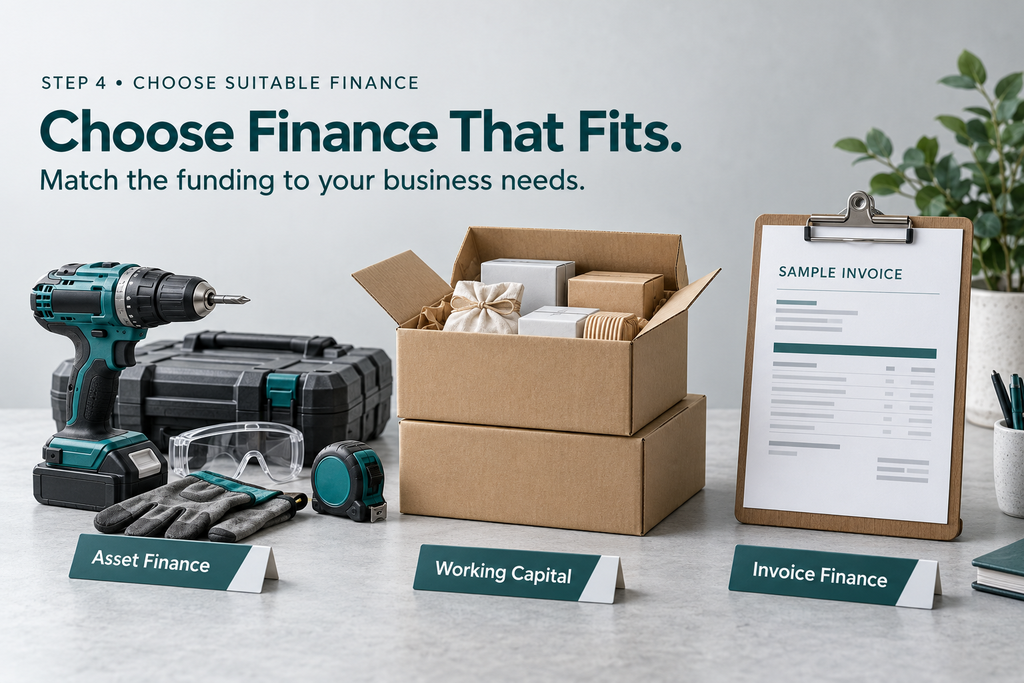
4.Choose suitable finance
Discuss whether a term loan, overdraft, asset finance or another option matches the expense.
Ask about repayment frequency, term, security and any large final payment. Daily or weekly payments need to fit the way your business receives money.
5. Compare offers
Compare the same amount and repayment period where possible.
- Interest rate and how it is calculated.
- Compulsory fees and total scheduled repayments.
- Payment frequency and loan term.
- Security and personal guarantees.
- Early-repayment conditions, default charges and ongoing obligations.
A smaller regular payment does not necessarily mean a cheaper loan.

6.Submit the application
Provide complete, accurate information and the requested documents. Explain significant losses, overdue accounts or unusual transactions. Do not hide debts or change records.
Ask who will manage the application and when you can expect an update.
7. Respond to questions
The lender may ask about forecasts, customers, management experience, security or existing debt. It may offer a different amount or structure. Check whether the revised offer still meets your needs.
Approval time varies. Avoid commitments based on an assumed funding date.
8. Review the agreement before signing
Confirm that the agreement matches your understanding.
- Amount received and fees deducted or added.
- Repayment amounts, dates and interest terms.
- Security, guarantees and reporting requirements.
- Early-repayment and default conditions.
Have your accountant review the financial impact and your lawyer explain the legal obligations where appropriate.
9. Complete conditions and receive funding
Approval may depend on signed documents, security, insurance or other conditions. Confirm when funds will be available and whether they go to the business or directly to a supplier.
10. Monitor the loan
Use the money for the agreed purpose, track repayments, update forecasts and meet reporting requirements.
Contact the lender early if circumstances change. Waiting until payments are missed reduces the time available to discuss options.
07 / AVOID DELAYS
Common mistakes to avoid
- Applying without a clear amount or purpose.
- Confusing sales with profit or cash available.
- Ignoring quiet months or late payments in forecasts.
- Leaving out tax, owner drawings or existing repayments.
- Comparing only the advertised rate.
- Signing a guarantee without understanding it.
- Using repeated borrowing to cover ongoing losses without a recovery plan.
- Assuming strong turnover guarantees approval.
YOUR NEXT STEP
Talk to Mortgage Advisors
Need help preparing an application or understanding your options? Talk to our team about your business, funding needs and repayment plan.

