


Pre-approval can help you understand your potential lending position before you start making offers—but it is a starting point, not a guarantee of final approval.
Buying a home can feel very different once you move from browsing properties online to actually attending open homes and considering making an offer.
One of the most useful steps you can take before reaching that stage is understanding your home loan pre-approval position.
Pre-approval can give you an indication of how much a lender may be prepared to lend, subject to conditions. It can help you search within a more realistic price range and understand what may still need to happen before your finance is fully approved.
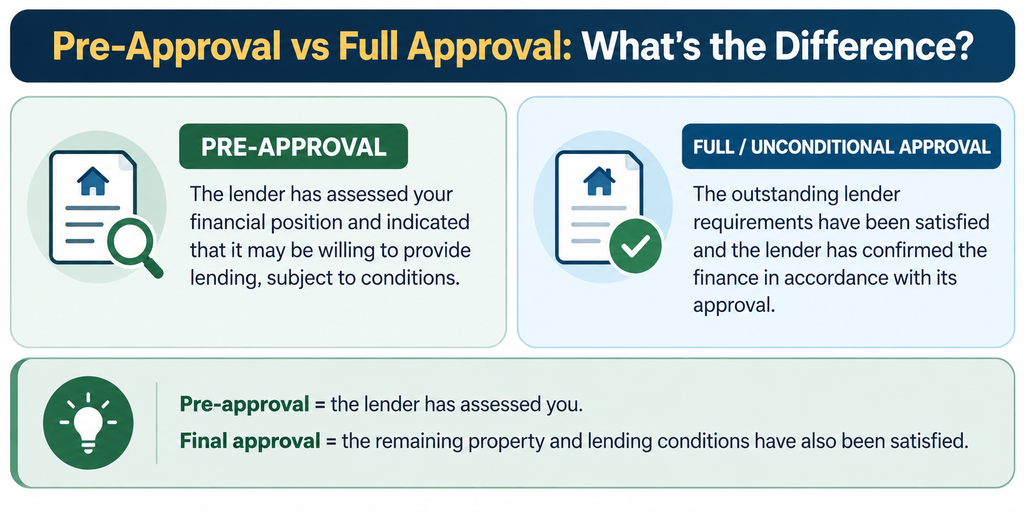
But pre-approval is also commonly misunderstood. It is not the same as unconditional approval, it does not guarantee that every property you choose will be acceptable to the lender, and it generally comes with conditions and an expiry period.
What Is Home Loan Pre-Approval?
Home loan pre-approval is an indication from a lender that it may be prepared to lend you up to a certain amount, provided specified conditions are satisfied.
Before providing pre-approval, a lender may assess your income, deposit or available equity, existing loans and debts, credit cards and credit limits, regular expenses, employment, credit history, dependants and household commitments, and proposed lending requirements.
The lender can then determine whether your financial position appears to meet its lending and serviceability criteria at that point in time.
Why Is Pre-Approval Important?
Pre-approval can give you much more information before you become emotionally and financially committed to a property. It can help replace uncertainty with a clearer starting point.
1. It Helps You Understand Your Potential Budget
Property websites can tell you the asking price and calculators can provide estimates, but neither necessarily tells you what a particular lender may be prepared to lend based on your complete financial position.
For example, a buyer may have a $120,000 deposit, household income of $150,000, an $18,000 car loan, a $10,000 credit card limit and household expenses of $4,500 per month. The lender considers the whole picture, not just income and deposit.
2. It Can Make Your Property Search More Focused
Once you have a clearer understanding of your potential budget, you can focus on homes that are more realistically within reach and reduce the risk of falling in love with a property that may not fit your lending position.
3. It Can Identify Problems Before You Find the House
Pre-approval can reveal issues earlier—for example, credit card limits affecting serviceability, additional income needing more evidence, a personal loan reducing borrowing capacity, deposit questions, or further employment information being required.

4. It Can Give You More Confidence at Open Homes
Without knowing your lending position, every property can involve the question: “Can we actually afford this?” Pre-approval can give you a clearer sense of the range you are working within, although your personal comfort level may be lower than the maximum a lender is willing to provide.
5. It Can Help When You Are Ready to Make an Offer
If a lender has already assessed much of your financial position through pre-approval, one major part of the lending process may already be underway. However, pre-approval does not mean you should automatically make an unconditional offer.
Pre-Approval Does Not Mean Every Property Is Approved
You may have pre-approval as a borrower, but the lender can still need to be comfortable with the property you want to buy. Questions can arise around valuation, location, property type, condition, title, construction, apartments or unusual properties.
Does Pre-Approval Guarantee You Will Get the Home Loan?
No. Pre-approval should not be treated as a guarantee of final lending. Your circumstances may need to remain satisfactory to the lender.
Avoid Major Financial Changes After Pre-Approval
- Financing a new vehicle
- Taking out a personal loan
- Increasing credit card limits
- Opening new credit cards
- Using significant Buy Now Pay Later facilities
- Changing employment
- Reducing working hours
- Spending a substantial portion of your deposit
If you are unsure whether a change could affect your pre-approval, speak with your mortgage adviser before proceeding.

How Long Does Pre-Approval Last?
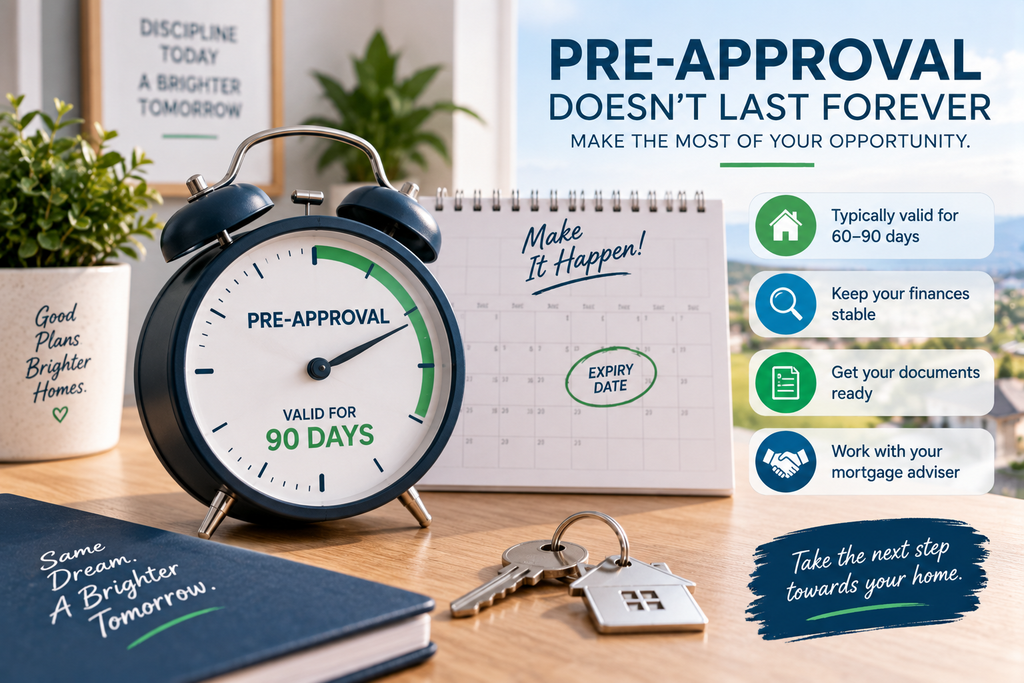
Pre-approvals generally do not remain valid indefinitely. The approval will normally have an expiry date determined by the lender. If you have not found a property before it expires, updated financial information may be required before the lender extends or reassesses the application.
What Happens If Interest Rates or Lending Criteria Change?
Pre-approval reflects an assessment made at a particular point in time. Lending policies, servicing assumptions, interest rates and your personal circumstances can change, so your borrowing position may need to be reviewed.
How Much Should You Borrow If You’re Pre-Approved for More?
The highest amount available is not automatically the right amount to borrow. There are two different questions: What is the lender prepared to approve? and What mortgage are you personally comfortable living with?
Pre-Approval for First-Home Buyers
Pre-approval can be particularly valuable for first-home buyers because it can help clarify your deposit, potential lending, likely purchase range, existing commitments and next steps before you start making offers.
What Documents Might You Need for Pre-Approval?
- Identification
- Proof of income and payslips
- Bank statements
- Evidence of your deposit
- Details of existing debts and credit cards
- Regular expenses
- Employment information
Self-employed applicants or borrowers with more complex income may need additional financial information.
Should You Get Pre-Approval Before Going to Open Homes?
You do not necessarily need pre-approval simply to attend an open home. But if you are becoming serious about purchasing, understanding your lending position before making offers can be extremely useful.
What If Your Pre-Approval Is Declined?
A declined pre-approval does not always mean the end of your home-buying plans. The important question is why. Borrowing capacity, existing debt, deposit size, supporting evidence or lender fit could all be factors.
Pre-Approval Is a Starting Point, Not the Finish Line
Think of pre-approval as getting a financial map before beginning the property search. It can show you approximately where you can go, highlight obstacles and help you choose a more realistic route
The strongest question is not simply “Am I pre-approved?”
It is: “What exactly is my pre-approval subject to, and what still needs to happen before I can safely proceed?”
How Mortgage Advisors Can Help
At Mortgage Advisors, we can review your financial position before you start seriously searching for a property. We can look at your income, deposit, existing debts, credit facilities and proposed borrowing and help you understand the lending options that may suit your circumstances.
If pre-approval is appropriate, we can also help you understand the conditions attached to it and what needs to happen once you find a property.
Frequently Asked Questions
What does home loan pre-approval mean?
It generally means a lender has assessed your financial position and indicated that it may be prepared to provide lending up to a certain level, subject to conditions.
Is pre-approval the same as final approval?
No. Pre-approval is generally conditional. Further requirements may need to be satisfied before the lender provides final or unconditional approval.
Does pre-approval guarantee I can buy any property?
No. The lender may still need to assess and accept the particular property being purchased.
Can I make an unconditional offer with pre-approval?
Pre-approval alone should not be assumed to make an unconditional offer safe. Ensure lender requirements have been satisfied and obtain appropriate legal and financial advice.
Can my borrowing amount change after pre-approval?
Yes. Changes to income, expenses, debts, deposit, lending criteria or other circumstances can potentially affect your position.
Should I borrow the maximum amount I’m pre-approved for?
Not necessarily. The maximum a lender may provide and the amount you are personally comfortable repaying can be very different.
Ready to Understand Your Buying Position?
Before you fall in love with the property, it can help to understand the finance. Mortgage Advisors can review your deposit, income and existing commitments and help you understand your potential home loan position before you start making offers.
027 703 0000

