


Bank vs Mortgage Broker: Which Is Better for Home Buyers?
Buying a home is exciting, but getting the right mortgage can feel complicated.
You may have already started looking at house prices, calculating your deposit and working out what your repayments could look like. Then comes another important question:
Should you go directly to a bank or speak with a mortgage broker?
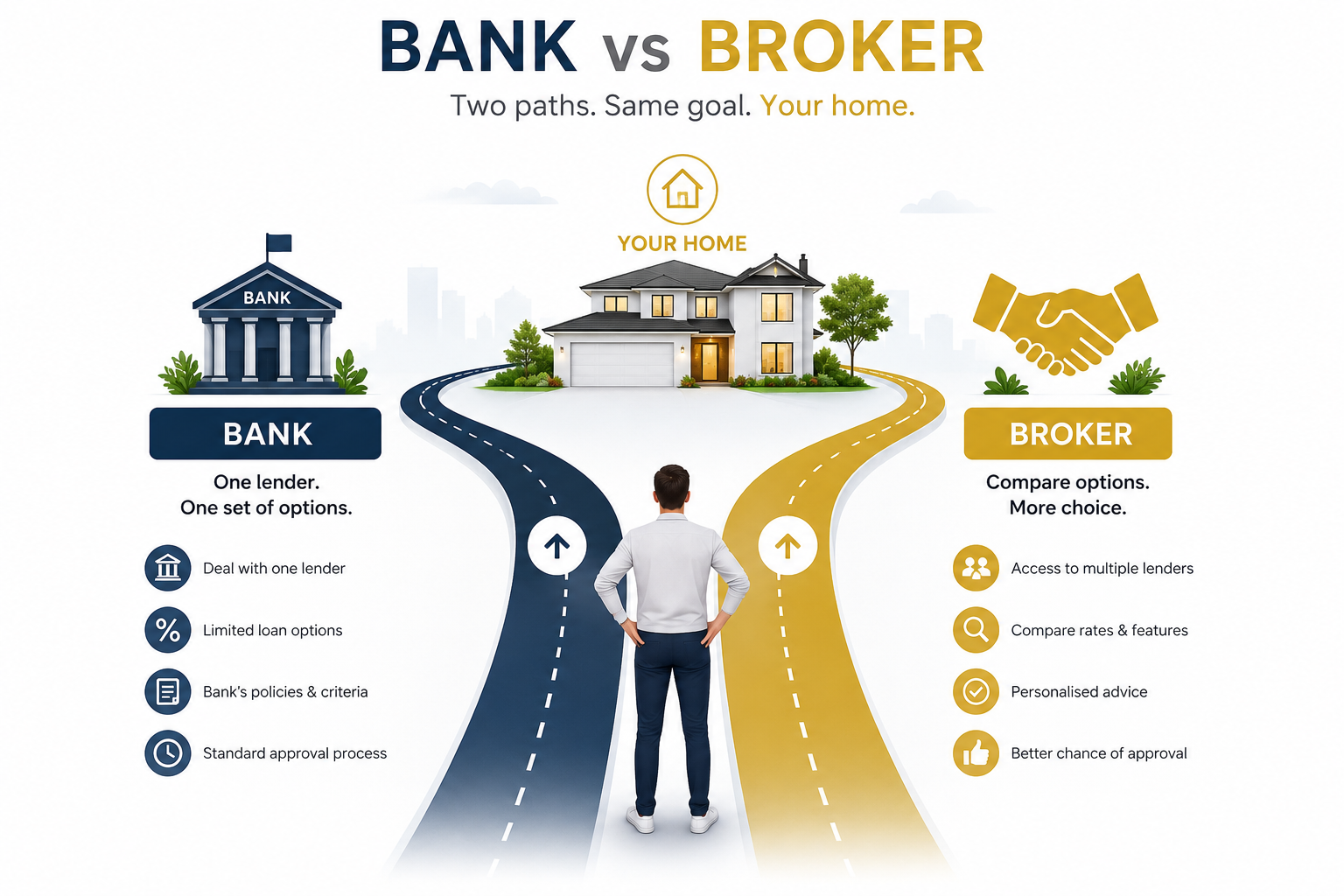
Bank vs Mortgage Broker: What’s the Difference?
Both options can help you arrange a home loan, but the experience can be quite different.
A bank provides its own lending products. A mortgage broker helps you explore lending options from the lenders available through their panel or network.
If you approach a bank directly, you can discuss its home-loan products, interest rates, lending criteria and application process.
If you speak with a mortgage broker, the broker first looks at your financial circumstances and then considers which available lenders and loan options may be suitable.
This can be particularly useful if you’re unsure where to start or your financial situation isn’t completely straightforward.
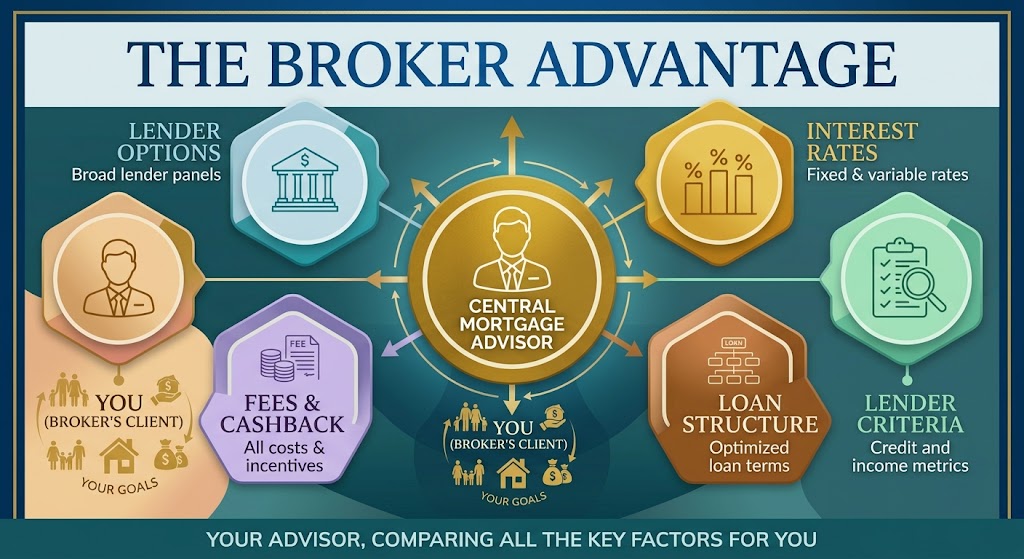
A mortgage broker may help compare available lender options, interest rates, lending criteria, loan structures, fees and incentives.
When Your Financial Situation Isn’t Straightforward
Different lenders can assess different circumstances in different ways. Understanding the wider lending landscape can therefore be valuable.
For example, a borrower might have:
- PAYE employment income
- Self-employed income
- Commission or bonus income
- Existing debts
- Rental income
- A smaller deposit
- Existing home equity
- Plans to renovate or invest
Bank vs Mortgage Broker
How Does Going Directly to a Bank Work?
When you approach a bank directly, you deal with that bank throughout the mortgage process.
You may discuss your borrowing capacity, available loan products, interest rates and repayment options with the bank’s lending team.
Potential Advantages
- You already have a relationship with the bank.
- You may already use its everyday banking services.
- You can deal directly with the lender.
- You may prefer managing the process yourself.
- You can discuss that bank’s products and policies directly.
For borrowers with a straightforward financial situation who already know which bank they want to use, this can be a perfectly reasonable approach.
How Does a Mortgage Broker Work?
A mortgage broker takes a different approach. Rather than starting with a particular bank, the process generally starts with you.
The broker looks at your financial position, goals and borrowing requirements before considering available lending options.
A Broker May Help With
- Understanding what you could potentially borrow.
- Considering which lenders may be worth approaching.
- Understanding required documentation.
- Comparing different loan structures.
- Preparing the application.
- Communicating with the lender.
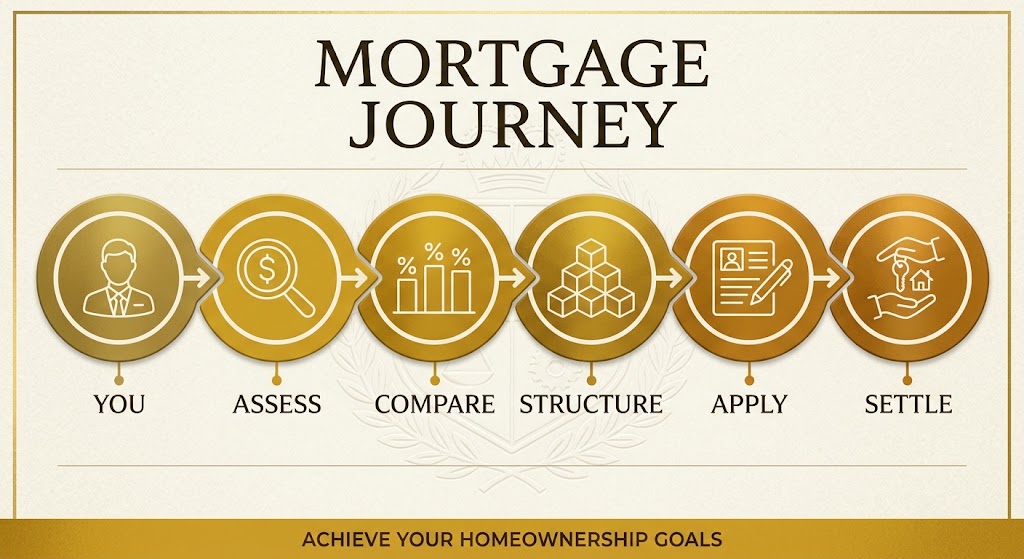
The Mortgage Journey
The mortgage process generally follows a structured path:
Mortgage Broker vs Bank: Key Differences
1. Choice of Lenders
When you go directly to a bank, you’re looking at that bank’s products. A mortgage broker may have access to multiple lenders, depending on their network and agreements.
This can give you more opportunities to compare lending criteria, loan structures and interest rates.
Pro Tip:
Don’t just ask, “Can you get me a good rate?”
Ask: “Which lenders do you have access to, and how do you decide
which one is suitable for me?”
2. Mortgage Rates and Loan Costs
Interest rates are obviously important when choosing a mortgage. But focusing only on the headline rate can be misleading.
A mortgage may also involve loan fees, account fees, cashback incentives, break costs and floating-rate features.
A broker can help you compare the overall lending package rather than simply focusing on one advertised rate.
3. Application Support
A mortgage application can involve a significant amount of paperwork. A broker can help you understand what documentation is required and prepare the application before it is submitted.
4. Lending Criteria
Not every lender assesses applications in exactly the same way. Understanding your position before applying can help you consider which lending options may be appropriate.
5. Loan Structure and Advice
Choosing a mortgage isn’t just about deciding how much to borrow. You also need to think about how the loan is structured.

Convenience and Ongoing Support
Having someone help coordinate the mortgage side can make the process easier.
A broker can act as a point of contact between you and the lender and may continue assisting as your mortgage needs change.
When Might Going Directly to a Bank Make Sense?
A bank could be a good option if:
- You already have a strong relationship with the bank.
- Your finances are straightforward.
- You know which lender you want to use.
- You prefer dealing directly with the lender.
- You want to manage the research and application yourself.
When Might a Mortgage Broker Be a Better Option?
A mortgage broker may be worth considering if:
- You’re buying your first home.
- You’re unsure which lender to approach.
- You want to compare multiple lending options.
- Your income is complicated or you’re self-employed.
- You’re refinancing.
- You don’t have time to research multiple lenders.
Does a Mortgage Broker Get You a Better Interest Rate?
Not necessarily.
A mortgage broker doesn’t have a magic button that guarantees the lowest rate.
What a broker can potentially do is give you access to multiple lenders and help you compare the options available to you.
Does Using a Mortgage Broker Cost Money?
In many cases, lenders pay brokers a commission when a mortgage settles. However, arrangements can differ, and there may be situations where a broker charges a fee.
Always ask your broker up front about how they are paid.
What Should You Consider Before Choosing?
Choice
How many lending options can you realistically compare?
Service
Who will help you understand the process?
Lending Criteria
Which lenders may be comfortable with your circumstances?
Loan Structure
Does the proposed mortgage work with your current and future plans?
Total Cost
What are the interest rate, fees, incentives and other relevant costs?
Convenience
How much time do you want to spend researching?
Bank vs Mortgage Broker: Which Is Better for You?
There isn’t one answer that works for every home buyer.
Going directly to a bank can make sense if you already know the lender you want.
Using a mortgage broker can make sense if you want to compare available lenders and have guidance through the application.
The right choice depends on your circumstances, your preferences and the type of mortgage you’re looking for.
Frequently Asked Questions
Is it better to go through a mortgage broker or bank?
Neither option is automatically better for everyone. A bank gives you access to its own lending products, while a mortgage broker may allow you to compare options from multiple lenders.
Is a mortgage broker cheaper than a bank?
Not necessarily. Compare the total cost of the loan, including interest rates, fees, incentives and any broker fees that may apply.
Can a mortgage broker get a lower interest rate?
A broker may have access to competitive rates from different lenders, but they cannot guarantee the lowest rate. Your rate depends on the lender, your circumstances and the lending market.
Do mortgage brokers have access to all banks?
No. Broker lender panels vary. Always ask which lenders the broker works with.
Is a mortgage broker worth it for a first-home buyer?
A broker can be particularly helpful for first-home buyers because they can explain borrowing capacity, loan structures, documentation and the application process.
Can I talk to a bank and a mortgage broker?
Yes. You can explore your options before deciding which route you prefer.
Can a mortgage broker help with refinancing?
Yes. Mortgage brokers can also help existing homeowners review refinancing and restructuring options.
Ready to Explore Your Mortgage Options?
Choosing between a bank and a mortgage broker doesn’t have to be confusing. Explore your options and take the next step towards your home-buying goals.
Talk to a Mortgage Advisor
