


Pre-approval can tell you that a lender is comfortable with your financial position, subject to conditions. Full approval goes a step further by considering the actual property and the complete lending proposal.
Buying a home is exciting, but the language used during the mortgage process can be confusing. Two terms that often cause uncertainty are pre-approval and full mortgage approval.
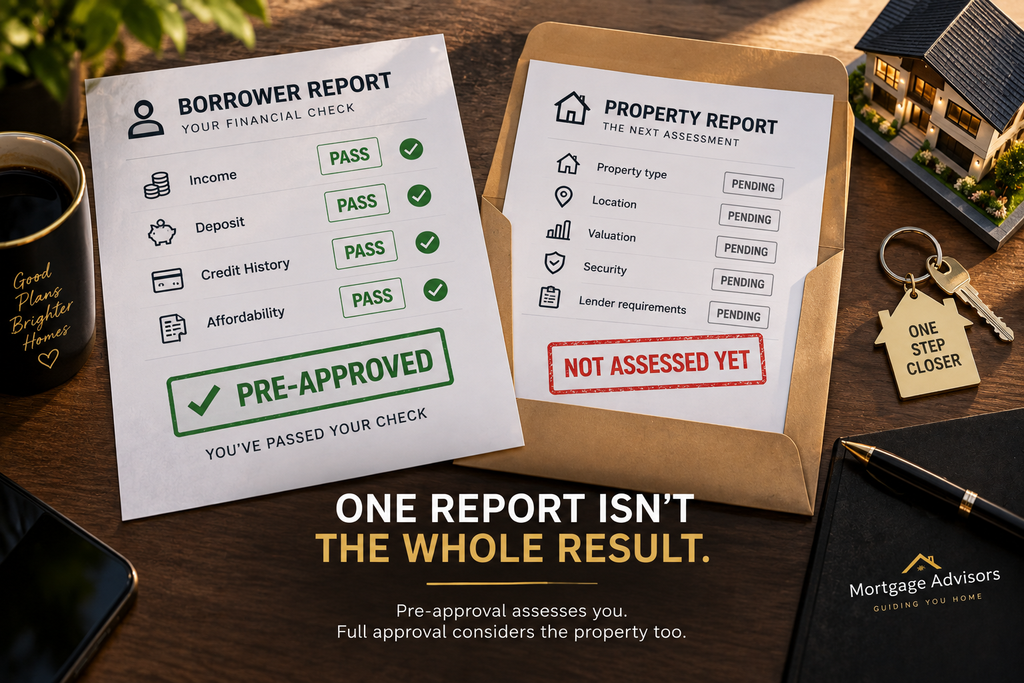
They are connected, but they do not mean the same thing. Pre-approval generally focuses on you as the borrower. Full approval usually comes later, once a lender has also assessed the property and confirmed that the remaining lending requirements are satisfied.
What Is Mortgage Pre-Approval?
Mortgage pre-approval, sometimes referred to as conditional approval, is an indication that a lender may be prepared to lend up to a certain amount, subject to its terms and conditions.
When considering pre-approval, a lender will usually look at information such as your income, employment, deposit, existing debts, credit limits, regular expenses and overall affordability. The exact assessment varies by lender and by application.

Think of it this way: pre-approval can mean the lender has checked your side of the application. It does not automatically mean every property you choose will be acceptable.
What can pre-approval help you do?
For many buyers, pre-approval provides a clearer starting point before they become committed to a property. It may help you understand your likely borrowing range, identify any conditions that need to be dealt with, and focus your property search on a more realistic price range.
For example, you might begin looking at homes around $850,000, but after your financial position is assessed, you may discover that a lower purchase range is more appropriate. Finding that out before signing a sale and purchase agreement can save time and reduce unnecessary stress.
Does pre-approval guarantee your loan?
No. This is one of the most important points to understand. A pre-approval is generally subject to conditions and should not be treated as a promise that the lender will finance any property you choose.
Your circumstances also need to remain acceptable. Significant changes after pre-approval, such as taking on a new car loan, increasing credit limits, changing employment or increasing other financial commitments, may affect the lender’s assessment.
What Is Full Mortgage Approval?
Full mortgage approval generally comes after you have selected a property and the lender has reviewed the complete lending proposal. At that point, the lender is not only looking at you as a borrower. It is also deciding whether the property is acceptable as security for the loan.
Depending on the lender, the property and your circumstances, this stage may involve reviewing the signed sale and purchase agreement, checking the property type, assessing a valuation if required, confirming your deposit and verifying that any outstanding approval conditions have been met.

Pre-Approval vs Full Approval: The Key Difference
Pre-Approval
Main focus: you and your financial position.
Usually obtained before you have committed to a specific property.
Often subject to conditions and expiry dates.
Useful for understanding a possible borrowing range.
Full Approval
Main focus: you, the property and the complete transaction.
Usually follows the selection of a specific property.
Requires relevant approval conditions to be satisfied.
Relates to the actual property and lending proposal.
In simple terms: Pre-approval says, “the borrower may fit.” Full approval says, “the complete lending proposal has been assessed and approved, subject to any final requirements stated by the lender.”
Why Does the Property Still Need to Be Checked?
A home loan is secured against a property, so lenders need to be comfortable with the property as well as the borrower. This is why a borrower can have pre-approval and still need further assessment once a home is found.

The lender may consider matters such as the property type, location, condition, valuation, security suitability and whether it fits the lender’s current credit policy. Some properties can require more assessment than a standard suburban home.
A valuation may also be required in certain circumstances. If the lender’s accepted value differs from the purchase price, that can affect the amount available to borrow or the level of deposit required.
Why could a pre-approved application still run into problems?
- The selected property does not meet the lender’s requirements.
- The valuation does not support the proposed lending.
- Your financial circumstances have changed since pre-approval.
- An approval condition cannot be satisfied.
- The pre-approval has expired and updated information is required.
- New information is identified during the lender’s final assessment.
What Happens After You Receive Pre-Approval?
Understand the conditions.Read the pre-approval carefully so you know what the lender still requires.
Search within a realistic range.Use the approval as a guide rather than assuming the maximum figure should automatically become your spending budget.
Find a suitable property.Once you find a home, provide the property and transaction information to your adviser or lender.
Complete the property assessment.The lender can then review the property, valuation requirements and outstanding conditions.
Progress toward full approval.Once the lender is satisfied with the complete proposal, the application can move toward full approval and settlement preparation.
Can You Make an Offer With Pre-Approval?
Yes, buyers with pre-approval can make offers. However, having pre-approval does not automatically mean it is safe to make an unconditional offer.
The particular property may still need lender approval, and your pre-approval may contain outstanding conditions. Before removing a finance condition or making an unconditional commitment, make sure you understand exactly what has and has not been approved.
Your solicitor or conveyancer should also advise you on the legal aspects of the sale and purchase agreement and the conditions appropriate for your situation.
What About Buying at Auction?
Auctions require extra care because a successful bid is generally unconditional. Pre-approval alone should not be treated as confirmation that every property you bid on will be acceptable to your lender.
Before bidding, speak with your mortgage adviser and solicitor about the particular property and any checks that should be completed before auction day.
What Documents Might Be Required?
Requirements vary, but a home loan application may involve documents such as:
- Proof of identity
- Recent payslips or other income evidence
- Bank statements
- Evidence of your deposit
- Details of existing debts and credit facilities
- Evidence supporting additional income
- The sale and purchase agreement once a property is selected
- Property information or valuation where required
Self-employed applicants and applicants with more complex income structures may need to provide additional information.
Should You Get Pre-Approval Before Looking for a Home?
For many first-home buyers and next-home buyers, having your finances assessed before getting serious about a property can be useful. It can help identify a likely price range, highlight issues that need attention and give you a clearer picture of what the lender may require.
It is also worth remembering that a lender’s maximum figure and your own comfortable budget are not necessarily the same thing. Your day-to-day expenses, future plans and preferred repayment level matter too.
How Can a Mortgage Adviser Help?
Different lenders can assess the same application differently. Their serviceability calculations, credit policies, income requirements and property criteria can vary.
Pre-Approval Is an Important Start Not the Finish Line
Pre-approval can be a valuable step because it gives you more clarity before you commit to a home. But it is best understood as part of the process rather than the final lending decision.
The simplest distinction is this: pre-approval is largely about whether you may qualify as the borrower; full approval considers the borrower, the property and the complete lending proposal.
Planning to Buy a Home?
Mortgage Advisors can help you understand your borrowing position, prepare for pre-approval and guide you through the next steps once you find a property.

