

There’s more to a home than the deposit.
A little planning now can make moving day—and everyday life afterwards—feel more manageable. Give every cost a place in your budget.
Visual guide · Published 13 October 2026
Plan for the purchase. Prepare for the move.
Leave room for the life you’ll build there.
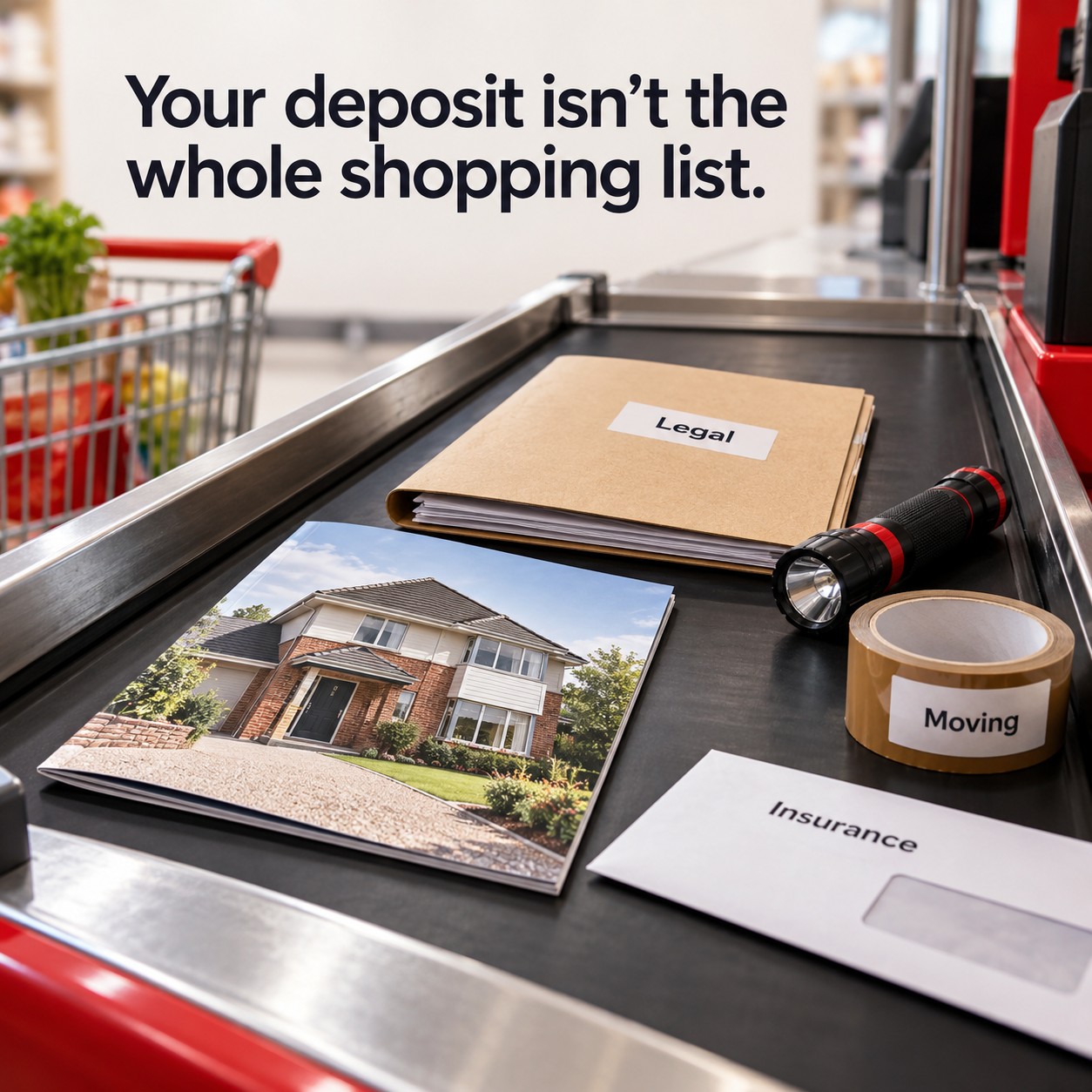
01 / Start with the whole shopping list
Your deposit is the beginning.
Keep money available for the purchase process as well as your contribution to the property price. A separate cost list makes it easier to see what still needs a quote.
- Legal workAsk a solicitor for an estimate, including disbursements.
- Property checksAllow for the reports and checks appropriate to the home.
- Moving and setupList transport, packing and essentials for your first week.
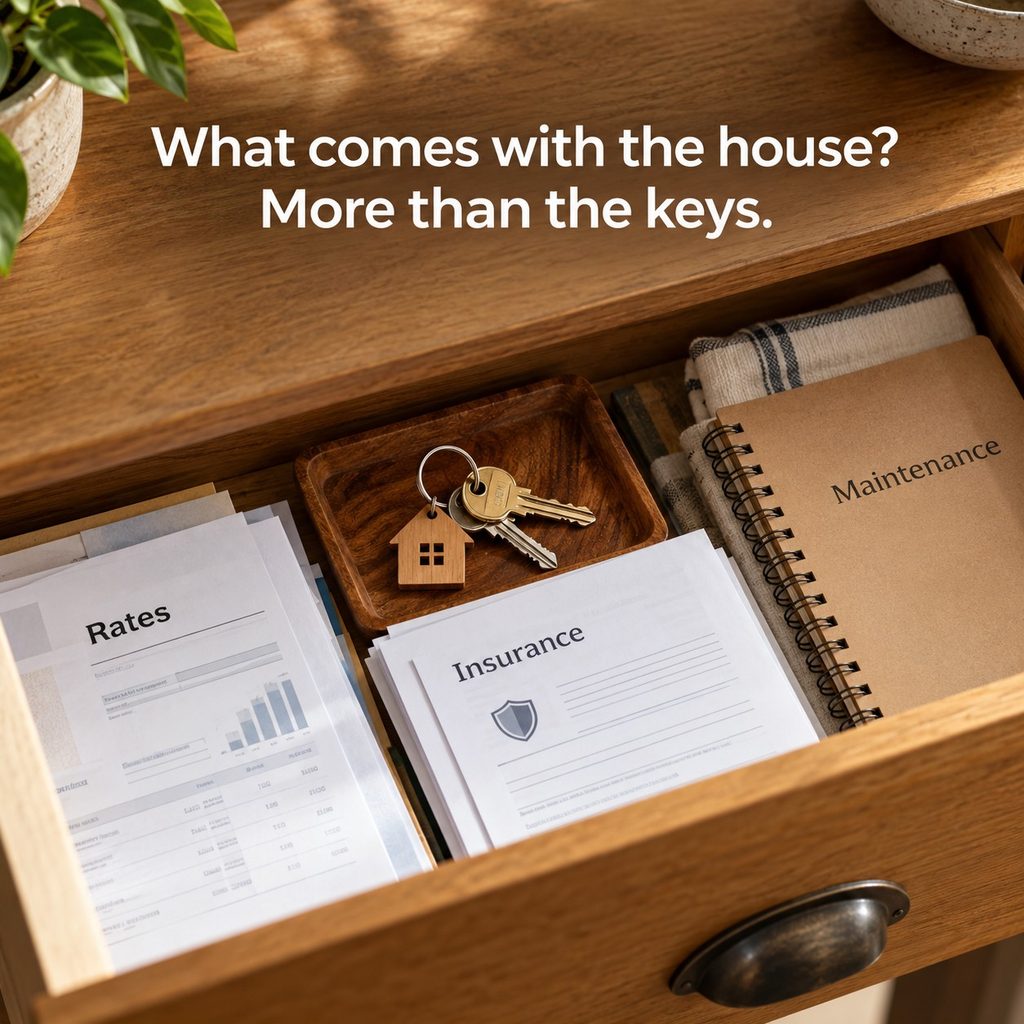
02 / Think beyond the keys
Ownership brings a new routine.
Your household budget needs room for the costs of looking after a home. Check the property’s council rates and get insurance quotes before finalising your spending plan.
- RatesCheck the relevant council’s property information.
- InsuranceConsider the cover you need for the house and your belongings.
- MaintenanceSet aside money for repairs and regular upkeep.
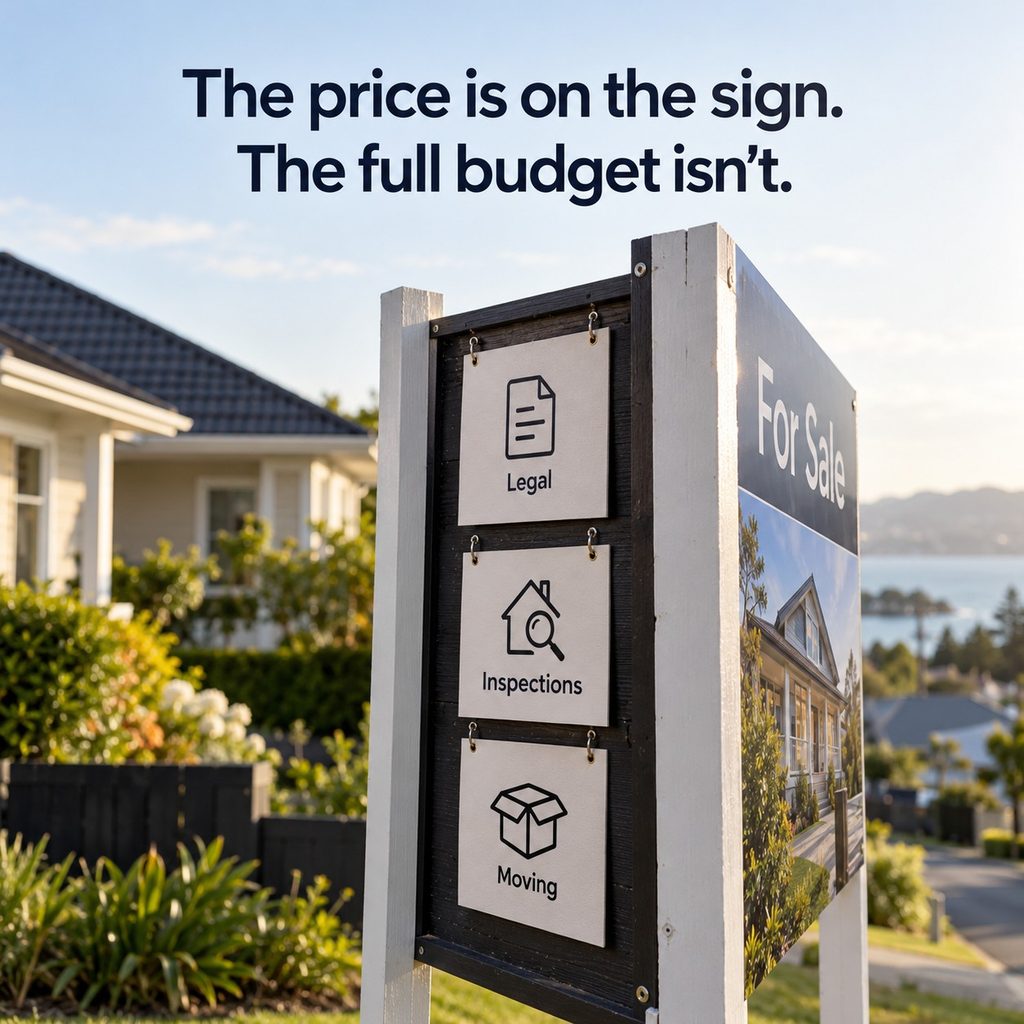
03 / Look behind the asking price
The listing cannot show your full budget.
The amount you pay for the property is only one part of the decision. Compare the home with the money you will have left for checks, settlement and moving.
- Legal reviewHave your solicitor explain the agreement and title.
- InspectionConsider an independent building inspection.
- MovingGet a quote based on your actual distance and belongings.

04 / Plan for arrival and everyday life
Make room for both chapters.
A move has immediate expenses, while home ownership creates regular commitments. Prepare two lists so your first week does not use up money needed for the months ahead.
- First nightMoving supplies, food and essential household items.
- Every monthMortgage repayments, utilities and insurance payments.
- Over timeRates, maintenance and a reserve for unexpected repairs.

05 / Know when each bill is due
Some expenses come before moving day.
Ask each provider when payment is required. You may pay for checks or legal work before settlement, so keep track of the timing as well as the total.
- Legal feesConfirm the payment schedule with your solicitor.
- ValuationCheck whether your lender requires one before commissioning it.
- InsuranceConfirm the required cover and start date with your lender and insurer.

06 / Give each cost a place
A clear plan is easier to use.
Organise your budget into five categories: deposit, legal work, property checks, moving and ongoing costs. Record the estimate, the confirmed quote and the payment date for each item.
- SeparateKeep your deposit distinct from other purchase expenses.
- ConfirmReplace rough estimates with provider quotes.
- ReviewCheck what remains available after settlement.
Your next step
Before you commit,
check the whole picture.
Use this list to start the conversation with your solicitor, lender and mortgage adviser. Tick each item when you have reviewed it.Deposit availableLegal quote requestedProperty checks budgetedValuation requirements confirmedInsurance quote obtainedRates checkedMoving costs estimatedOngoing household budget reviewedEmergency reserve considered
0 of 9 items reviewedPrint this guide
Plan your next move
Bring your full budget to the conversation.
Speak with a mortgage adviser about how the purchase and ongoing costs fit alongside your home loan.Visit Mortgage Advisors ↗Beyond the Deposit · A visual guide to home-buying costs in New Zealand

