

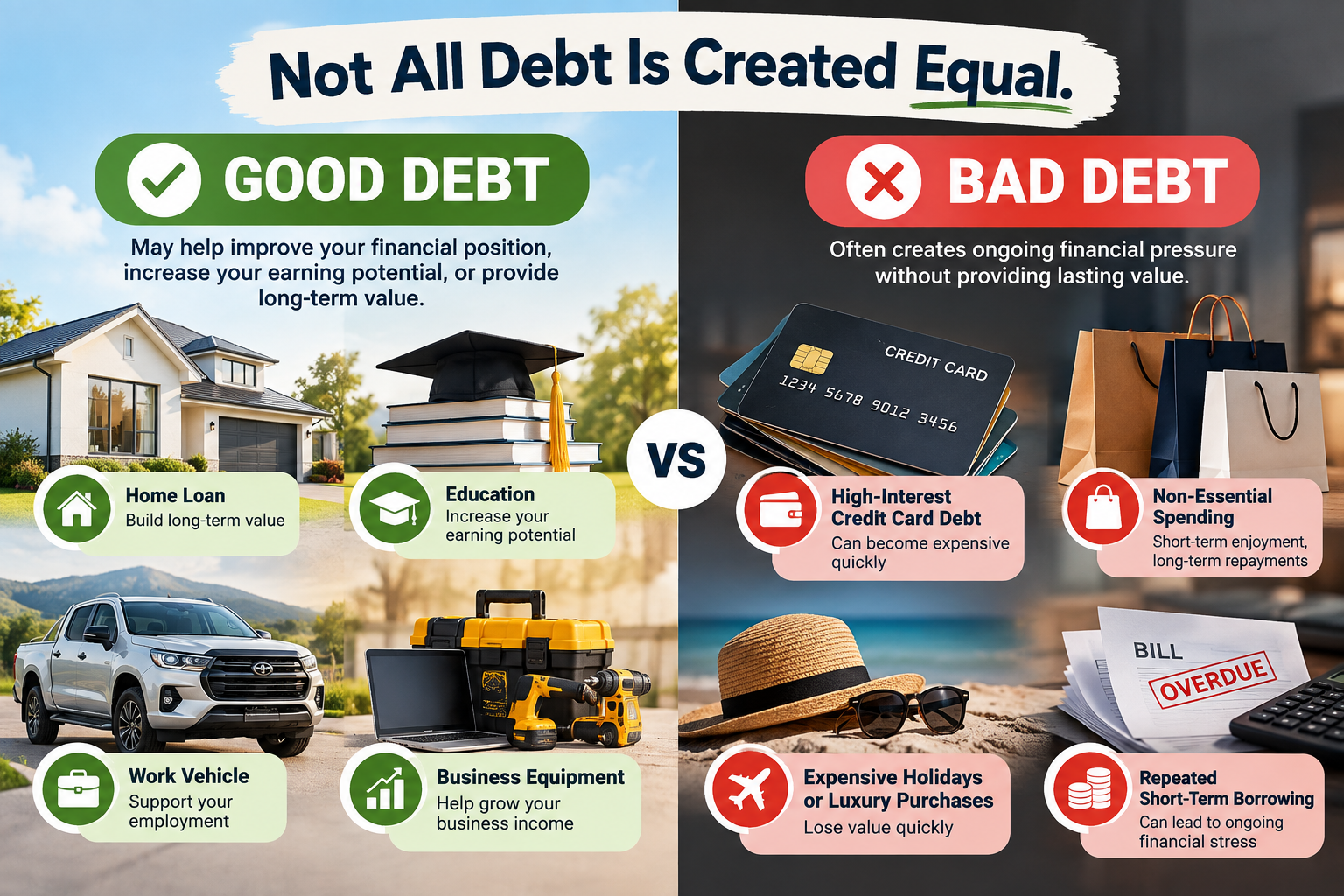
Not all debt affects your finances in the same way. Learn how to recognise productive borrowing, spot risky debt, and make more informed decisions before taking on a loan.
Debt is not always a bad thing. For many New Zealanders, borrowing is part of everyday life — from buying a home or work vehicle to using a personal loan or credit card. The more useful question is not simply “Do I have debt?” but “Is this debt helping or hurting my financial position?
What Is Good Debt?
Good debt is generally borrowing that may help improve your financial position, increase your earning potential, or provide long-term value. That does not make it risk-free. Even debt taken on for a productive purpose still needs to be affordable and properly managed.
1. A Home Loan
A mortgage is often considered an example of productive debt because it allows you to purchase a property that may provide long-term value. As you repay the loan, you may gradually build equity in the property.
However, a home loan should not automatically be considered “good” simply because it is connected to property. Repayments still need to fit your budget, and you should allow for rates, insurance, maintenance and other ownership costs.
2. Education or Career-Related Borrowing
Borrowing for education, professional qualifications or training may be productive if it helps improve your employment opportunities or future earning potential. The key is whether the cost is reasonable compared with the likely benefit.
3. Business or Work-Related Borrowing
Some people borrow to purchase equipment, vehicles, technology or other assets needed to operate or grow a business. This may be productive when the borrowing supports income generation, but business income can fluctuate, so repayments need to remain manageable.
What Is Bad Debt?
Bad debt generally refers to borrowing that creates ongoing financial pressure without providing lasting value or improving your financial position. It often involves high interest rates, unnecessary spending or purchases that lose value quickly.
1. High-Interest Credit Card Debt
Credit cards can be useful when managed carefully. Problems can arise when balances are carried from month to month and interest keeps accumulating. If you regularly make only the minimum repayment, it can take a long time to clear the balance.
2. Borrowing for Non-Essential Spending
Using debt for expensive holidays, luxury purchases, entertainment or other non-essential items can become problematic if there is no clear repayment plan. The enjoyment may be short-term, while repayments continue for months or years.
3. Repeated Short-Term Borrowing
Frequently relying on short-term borrowing to cover normal household expenses can be a sign that your budget needs attention. More borrowing may temporarily solve the problem while making future repayments harder.
4. Debt Used to Repay Other Debt Without a Plan
Borrowing to repay existing debt is not automatically bad. Debt consolidation can sometimes simplify repayments or reduce interest costs. Problems can occur if debts are consolidated and the original credit accounts are then used again.
Good Debt vs Bad Debt: A Simple Comparison
| Good Debt | Bad Debt |
|---|---|
| May help build long-term value | Often pays for short-term consumption |
| May support income or career growth | Usually does not increase income |
| Usually has a clear financial purpose | Can come from impulsive or unnecessary spending |
| Repayments are planned and affordable | Repayments may create financial pressure |
| Can improve your financial position over time | Can reduce available cash flow without adding lasting value |
The Purpose of the Debt Matters
The type of loan does not always determine whether the debt is good or bad. Your reason for borrowing matters just as much.
For example, imagine two people each borrow $20,000. One uses the money to buy equipment that helps grow a business and increase income. The other uses the same amount for luxury purchases that provide no financial return. The loan amount may be identical, but the financial impact can be very different.
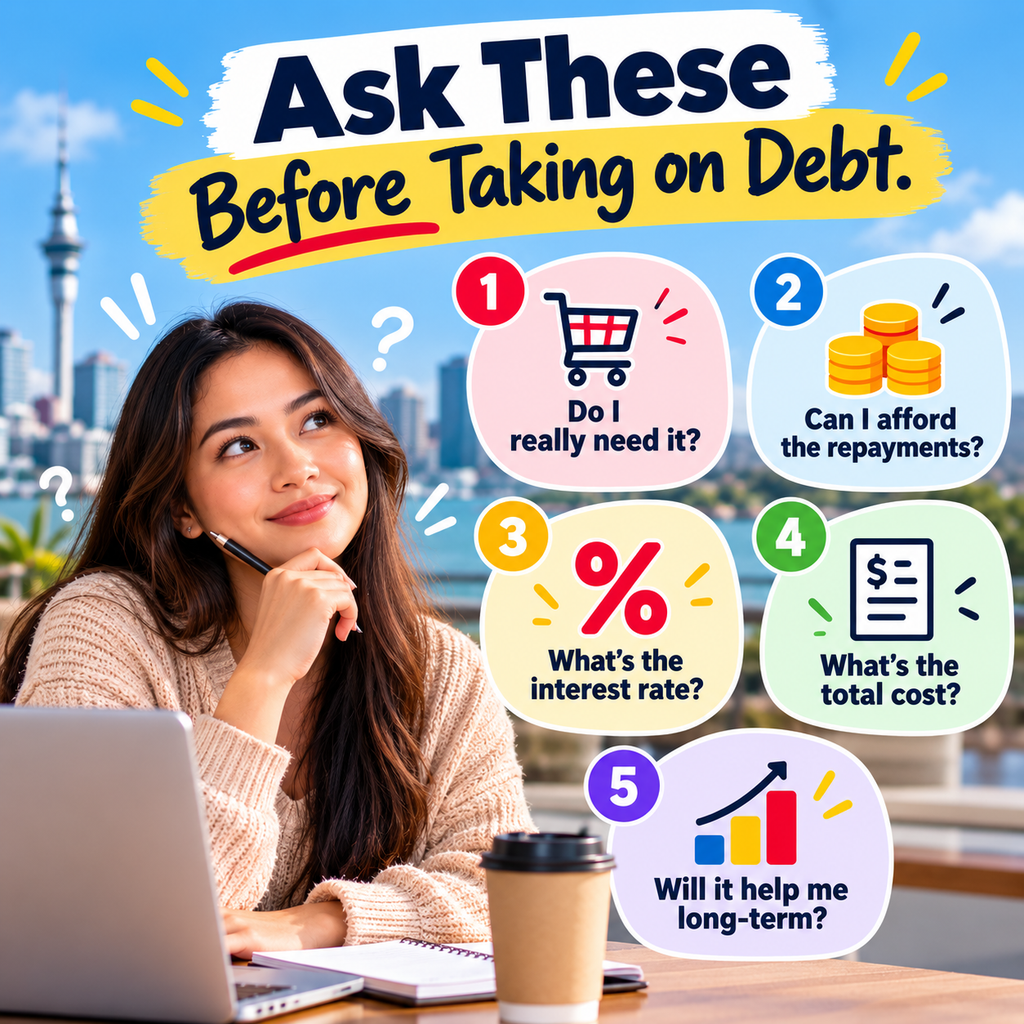
Before you borrow, ask: Do I really need it? Can I comfortably afford the repayments? What is the interest rate? What is the total cost? Will the borrowing help me financially in the long term?
Interest Rates Make a Big Difference
One of the biggest factors affecting any debt is the interest rate. Even a relatively small loan can become expensive when the interest rate is high and the repayment period is long.
When comparing loans, consider the interest rate, loan term, fees, repayment frequency, whether extra repayments are allowed, and whether the rate is fixed or variable. A lower weekly repayment may simply mean the loan has been stretched over a longer period.
Always look at the total amount you are likely to repay, not only the regular repayment.
When Good Debt Can Become Bad Debt
Even debt that starts with a useful purpose can become difficult to manage. A mortgage may become stressful if repayments consume too much household income. A business loan can become difficult if revenue falls.
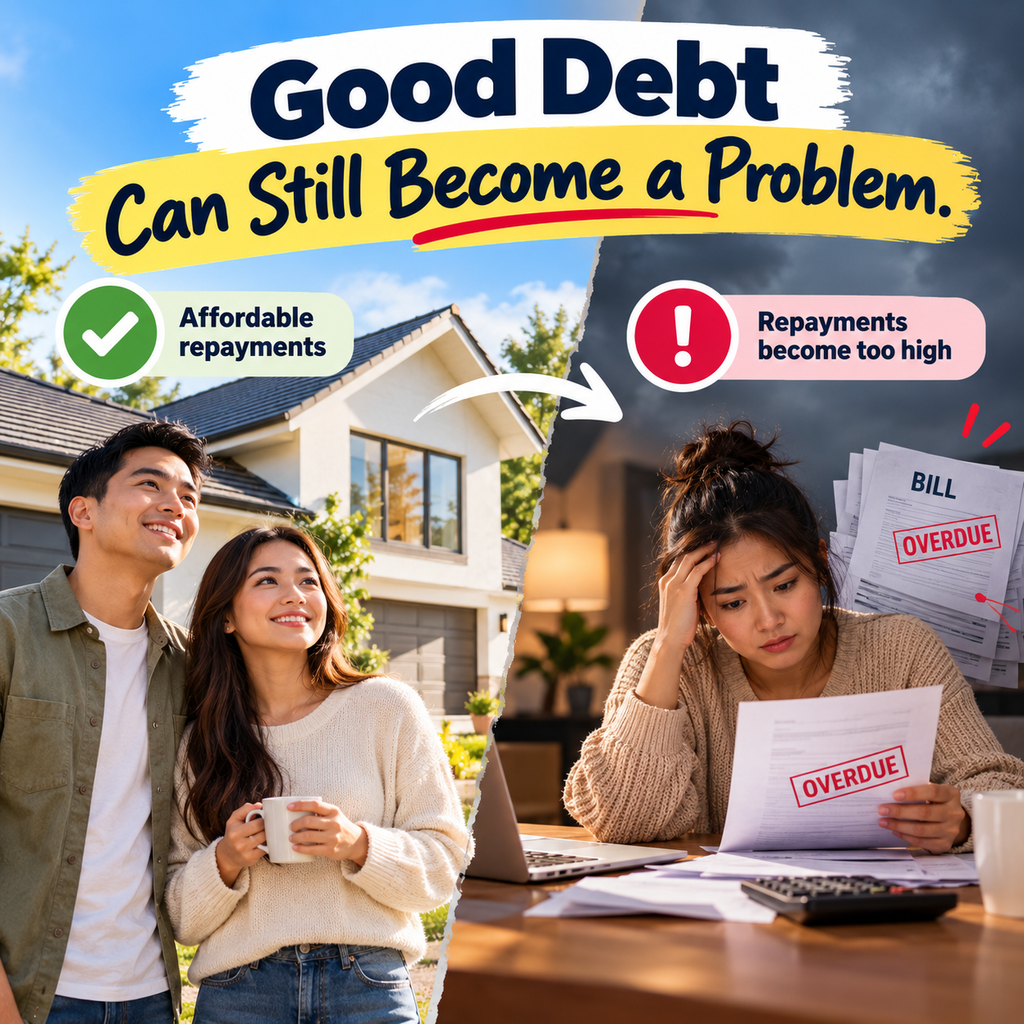
Debt can become problematic when repayments are no longer affordable, interest rates rise significantly, income falls, additional debt is added, repayments are missed, or the asset purchased loses value.
How Much Debt Is Too Much?
There is no single amount that is “too much debt” for everyone. A manageable debt level depends on your income, household expenses, dependants, existing loans, interest rates, repayment commitments, emergency savings and employment stability.
Instead of looking only at the total amount owed, consider how much of your regular income is being used for debt repayments. If repayments make it difficult to cover normal living costs or save money, it may be time to review your debt position.
Signs Your Debt May Be Becoming a Problem
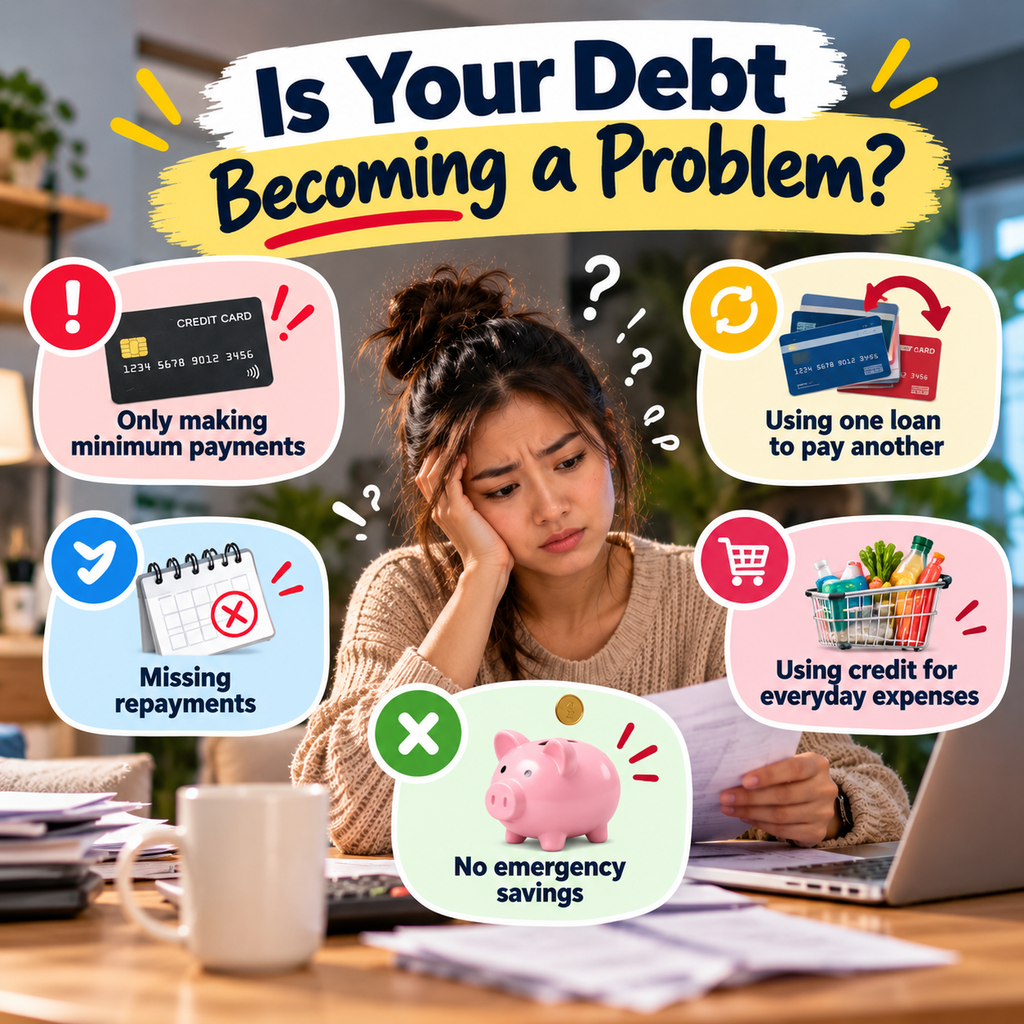
- Regularly making only minimum credit card repayments
- Using one loan or credit card to pay another
- Missing repayments or paying bills late
- Borrowing for everyday household expenses
- Having little or no emergency savings
- Feeling unsure about how much you owe
- Struggling to save because repayments use most of your available income
Can Debt Consolidation Help?
Debt consolidation involves combining multiple eligible debts into one loan. For example, you might have a credit card, personal loan, vehicle finance and store finance. Instead of several separate repayments, these may sometimes be combined into one repayment.
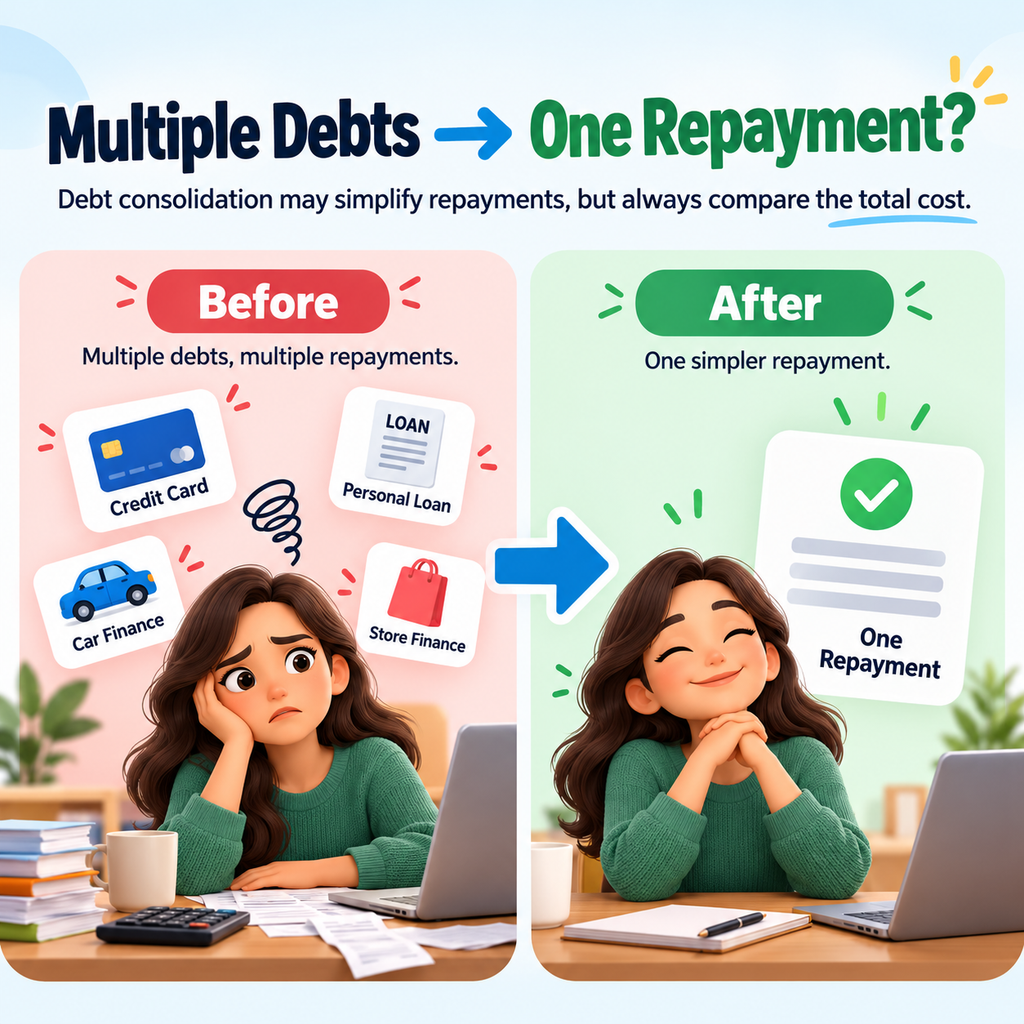
Potential benefits may include one repayment instead of several, easier budgeting, a clearer repayment timeline and potentially lower interest costs depending on the new terms. However, consolidation does not automatically reduce your debt.
Compare the new interest rate, fees, loan term and total repayment amount before proceeding. It is also important to avoid rebuilding balances on credit cards or accounts that have been consolidated.
How to Turn Your Debt Situation Around
Write down every debt. Record the lender, balance, interest rate, minimum repayment, repayment frequency and remaining term.
Identify high-interest debt. Look at which balances are costing you the most in interest.
Create a realistic budget. Review income and expenses and look for sustainable savings that can be directed toward debt.
Avoid adding new debt. Reducing balances is harder when new borrowing continues at the same time.
Consider extra repayments. Even small additional repayments may help reduce debt faster, subject to any lender restrictions or fees.
Review your loan structure. Depending on your circumstances, refinancing, restructuring or consolidating eligible debts may be worth exploring.
Questions to Ask Before Taking on New Debt
Do I really need to borrow?
Sometimes delaying a purchase and saving for it can be cheaper than financing it.
Can I comfortably afford the repayment?
Consider whether the repayment would still be manageable if an unexpected bill appeared or your income changed.
What is the total cost of the loan?
Look beyond the advertised weekly or fortnightly repayment and consider the total amount repaid over the full term.
What is the interest rate?
Understand whether it is fixed or variable and whether it may change.
Are there additional fees?
Application, establishment, administration and early-repayment fees can all affect the total cost.
How long will I be paying it off?
Longer terms often reduce each repayment but can increase the total interest paid.
Debt Is a Tool — How You Use It Matters
Debt itself is not automatically good or bad. It is a financial tool. Used carefully, borrowing can help people buy a home, invest in education, operate a business or manage important expenses. Used without a clear plan, it can become expensive and place significant pressure on a household budget.
The most important things to consider are what you are borrowing for, how much the debt will cost, whether the repayments are affordable, and whether the borrowing supports your longer-term financial goals.
Frequently Asked Questions
Is a mortgage considered good debt?
A mortgage may be considered productive debt because it allows you to purchase property and potentially build equity over time. However, repayments still need to be affordable and property ownership has additional costs and risks.Is a personal loan good debt or bad debt?
It depends on what the loan is used for, its interest rate and whether the repayments are affordable. A loan used for an important or productive purpose can have a different financial impact from borrowing for unnecessary spending.Is credit card debt always bad?
Not necessarily. Credit cards can be useful when balances are repaid in full and on time. They can become expensive when balances remain unpaid and interest continues to accumulate.Is vehicle finance bad debt?
Not automatically. A vehicle may be essential for commuting or work. However, vehicles generally lose value over time, so the loan amount, interest rate and repayment period should be considered carefully.Is debt consolidation a good idea?
Debt consolidation may help some borrowers simplify repayments or reduce borrowing costs, but suitability depends on individual circumstances. Compare the rate, fees, term and total repayment amount before making a decision.Should I pay off debt or save first?
This depends on your financial position, interest rates, emergency savings and other priorities. Some people choose to maintain emergency savings while also reducing higher-interest debt.
Need Help Reviewing Your Debt?
If you have several loans or repayments and want to understand your options, reviewing your current debt structure can be a useful first step. A finance professional can help you look at your existing commitments, repayment structure and possible options based on your circumstances.
Disclaimer: This article provides general information only and does not constitute personalised financial advice. Lending criteria, fees, interest rates, eligibility requirements and individual circumstances vary. Consider obtaining professional financial advice before making borrowing or refinancing decisions.Good Debt vs Bad Debt • Financial Education Article

