

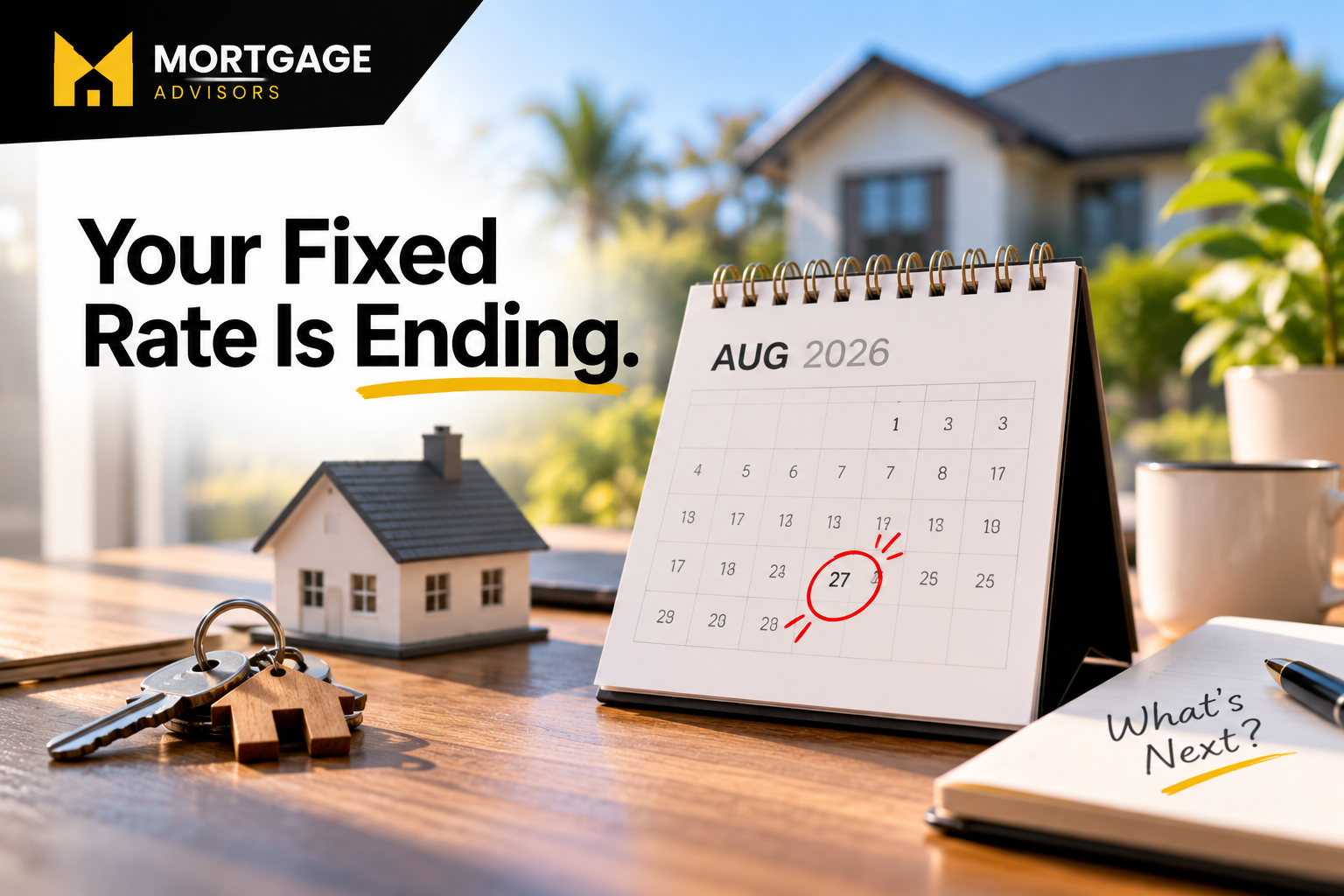
Reaching the end of a fixed mortgage term is completely normal, but it is also an important opportunity to review your home loan.
When you originally fixed your mortgage, you agreed to a particular interest rate for a set period, such as six months, one year, two years or longer. When that period ends, the agreed fixed rate no longer applies.
That does not mean your mortgage ends or that you suddenly need to repay the entire loan. Instead, you generally need to decide what you want to do with the remaining balance.
Depending on your lender and circumstances, you may be able to refix for another term, move onto a floating rate, split your mortgage, restructure your lending, or consider refinancing to another lender.
Your Mortgage Does Not End When the Fixed Term Ends
One of the most important distinctions is between your loan term and your fixed-rate period.
For example, imagine you have a 30-year home loan but fixed your interest rate for two years. At the end of those two years, you could still have approximately 28 years remaining on the mortgage. It is simply the two-year interest-rate agreement that has reached its end.
If you take no action, your loan may move to the lender’s applicable floating or variable rate, depending on the terms of your loan. Because lender processes and loan agreements differ, it is worth checking what will happen with your particular mortgage rather than assuming your existing rate will continue.
Important: If you take no action, your loan may move onto your lender’s applicable floating or variable rate, depending on your loan terms.
What Are Your Options When Your Fixed Rate Expires?
1. Refix your mortgage
A common option is to refix the remaining mortgage balance. The rates available when you refix may be different from the rate you previously had, so your repayments may change even if your outstanding balance has decreased.
2. Move to a floating rate
Instead of fixing again, you may be able to leave some or all of the mortgage on a floating or variable rate. Floating lending can provide flexibility, although the rate can change.
3. Split your mortgage
You may be able to divide your lending between different fixed terms and a floating portion. This can mean your entire mortgage does not come up for refixing at exactly the same time.
4. Restructure your mortgage
Your income, expenses, savings and future plans may have changed since you last fixed. A fixed-rate expiry can be a useful time to review whether your current structure still suits you.
5. Consider refinancing
Another lender may offer different rates, features or structures. However, refinancing should be assessed on the overall costs and benefits, not the headline interest rate alone.

What Happens to Your Repayments?
Your repayments can increase or decrease when you move onto a new interest rate. If the new rate is higher, your required repayment may increase. If rates have fallen, your required repayment could potentially decrease.
The actual impact depends on your balance, remaining loan term, repayment type, frequency and new interest rate. This is one reason borrowers should avoid waiting until the last moment to consider their options.

Don’t Automatically Refix Without Reviewing Your Mortgage
Online banking can make refixing look like a simple decision: choose a term, click a button and continue. But before doing that, it can be worth looking at the bigger picture.
Consider your available fixed-rate options, remaining loan term, household budget, savings, ability to make extra repayments, future property plans and whether refinancing is worth investigating.

Your Next Rate Is Only One Piece of the Puzzle
Interest rates naturally attract a lot of attention, but your mortgage structure can also make a significant difference to how your home loan works for you.
Fixed lending, floating lending, split loans, additional repayments and your own future plans can all form part of the bigger picture.

Can You Make a Lump-Sum Payment Before Refixing?
Potentially. The end of a fixed term can be a useful time to investigate whether some savings could be used to reduce the mortgage before the remaining balance is refixed.
Check your lender’s repayment rules and timing first, and consider keeping adequate emergency savings.
What If You Plan to Sell the Property Soon?
If you think you may sell your property in the near future, fixing the entire mortgage for another long period without considering that plan could reduce flexibility. Depending on your lender and circumstances, repaying fixed lending early can potentially involve costs.
How Early Should You Start Looking at Refixing?
You do not necessarily need to wait until the day your fixed rate expires. Many lenders allow borrowers to consider or lock in a new fixed rate before the existing term ends, although the timeframe and rules vary by lender.
Starting several weeks before the expiry date gives you more time to understand your options rather than making a rushed decision.
Don’t Try to Perfectly Predict Interest Rates
Nobody knows with certainty what mortgage rates will do next. Economic conditions, inflation, wholesale funding costs, the Official Cash Rate and lender pricing decisions can all affect mortgage rates.
Instead of asking only “Which fixed rate is cheapest today?”, also consider “Which mortgage structure makes sense for my circumstances and future plans?”
Frequently Asked Questions
What happens if I do nothing when my fixed mortgage expires?
Depending on your loan agreement, the lending may move onto your lender’s applicable floating or variable rate. Check your lender’s terms before the expiry date.
Do I have to stay with the same lender?
No. You can investigate refinancing to another lender, although you will generally need to meet that lender’s lending requirements and should consider the costs and benefits of moving.
Can I refix before my current rate expires?
Many New Zealand lenders provide refixing options before the expiry date. The timeframe varies, so check with your lender or mortgage adviser.
Can I split my mortgage when I refix?
Potentially. Depending on your lender and circumstances, you may be able to divide your mortgage into portions with different fixed terms and/or a floating component.
Should I fix for one, two or three years?
There is no single term that suits everyone. Available rates, repayment certainty, flexibility, your financial position and future plans should all be considered.
Is Your Fixed Mortgage Rate About to Expire?
Before automatically refixing, take the opportunity to review your mortgage. Mortgage Advisors can help you understand your options and consider whether refixing, restructuring or refinancing may suit your circumstances.

