


Fixed gives you more certainty. Variable gives you more flexibility. But choosing a mortgage structure is rarely as simple as picking one side.
Choosing between a fixed and variable mortgage rate is one of the important decisions you may face when setting up, refinancing or restructuring a home loan in New Zealand.
A fixed rate locks your interest rate in for an agreed period, helping make required repayments more predictable. A variable rate, commonly called a floating rate in New Zealand, can change and generally provides greater repayment flexibility.
Neither option is automatically better. The right structure depends on your budget, future plans, ability to handle repayment changes and how much flexibility you want.
What Is a Fixed Mortgage Rate?
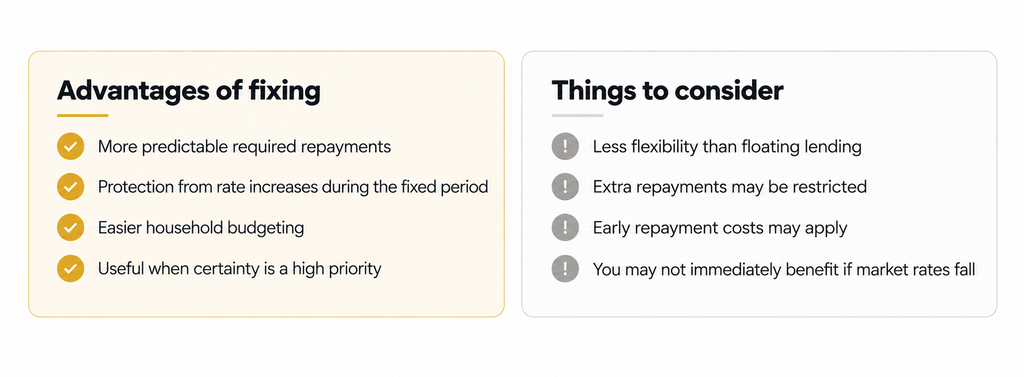
A fixed mortgage rate means the interest rate on your home loan is locked in for an agreed period. At the end of that period, you can generally review your options and choose another fixed term or move onto the lender’s applicable floating rate.
The main attraction is certainty. Because your rate does not change during the agreed fixed period, required repayments are more predictable. This can be particularly useful for households that want to know what their mortgage will cost from one repayment to the next.

What Is a Variable Mortgage Rate?
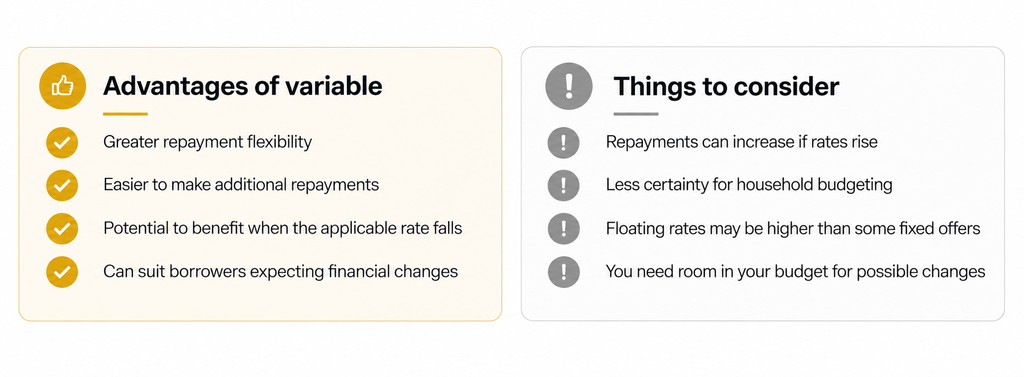
A variable mortgage rate can move during the life of your loan. If the lender changes its applicable floating home loan rate, the interest charged on your loan can change too. This means repayments may rise or fall.
The trade-off is flexibility. Floating lending generally gives borrowers more freedom to make additional repayments or repay lending early, subject to the lender’s terms.

When Could a Fixed Rate Make Sense?
A fixed rate may be worth considering when repayment certainty is one of your main priorities. A first-home buyer, for example, may be adjusting to mortgage repayments alongside rates, insurance, maintenance and other home ownership costs. Knowing the required mortgage repayment can make budgeting easier.
Rather than focusing only on whether rates might rise or fall, consider whether your household could comfortably absorb a higher repayment and whether you are likely to sell, refinance or make a substantial lump-sum repayment during the fixed period.
When Could a Variable Rate Make Sense?
Variable lending may make sense when flexibility matters more than certainty. Someone expecting a work bonus, inheritance or other lump sum may value the ability to direct additional money towards the mortgage. It may also be useful when a borrower expects to sell, refinance or restructure in the relatively near future.
The key question is whether you are comfortable with the possibility that the interest rate and required repayment could increase.

Do You Have to Choose Only One?
No. Depending on your lender and circumstances, a mortgage may be split into different portions. For example, a larger portion could be fixed for repayment certainty while a smaller portion remains floating for additional repayment flexibility.
You can also split lending across different fixed terms. This is sometimes called staggering or laddering. Different portions then reach the end of their fixed periods at different times rather than the entire mortgage being exposed to the rates available on one refixing date.
A mortgage does not need to be all fixed or all floating.
A carefully considered combination can sometimes provide a balance between certainty and flexibility. The proportions should reflect your actual financial circumstances rather than an arbitrary formula.
How Long Should You Fix For?
Choosing to fix is only the first decision. You also need to consider the fixed period. A shorter term gives you an earlier opportunity to review your loan, while a longer term can provide repayment certainty for longer.
Before choosing, think beyond today’s advertised rate. Are you planning to move? Could your income change? Are you expecting a large lump sum? Could you refinance? Do you expect major household expenses? Your likely circumstances during the fixed period matter.
What Happens When Your Fixed Rate Ends?
When a fixed period approaches expiry, it is a good opportunity to review the whole mortgage rather than automatically selecting another rate. Your income, loan balance, savings and plans may all have changed since you last fixed.
You can consider whether your repayment amount, loan structure and fixed period still support what you want to achieve.
Should You Break a Fixed Mortgage for a Lower Rate?
A lower advertised rate does not automatically mean breaking an existing fixed loan will save money. Early repayment costs and other refinancing expenses may apply. Any potential interest saving should be considered alongside the total cost of changing the loan.
What Should First-Home Buyers Consider?
There is no single structure that suits every first-home buyer. Someone with limited spare income may place a high value on predictable repayments. Another borrower with stronger cash flow may value the ability to make additional repayments. Others may prefer a combination.
Your emergency savings, household expenses, future income and comfort with possible repayment increases should all be part of the decision.
What Should Property Investors Consider?
Property investors may have additional considerations including cash flow, rental income, future purchases, equity and refinancing plans. An investor planning another purchase may value flexibility differently from someone intending to hold one property for many years.
The broader lending strategy can matter just as much as the interest rate displayed today.
5 Questions to Ask Before Choosing
- How much repayment certainty do I need?
- Am I likely to make additional repayments?
- Could I sell or refinance soon?
- Could my income or expenses change?
- Would a combination of fixed and floating suit me better?

Why the Lowest Rate Is Not Always the Whole Story
It is easy to compare mortgages by looking at the interest rate alone, but the lowest advertised rate does not automatically mean the most suitable home loan structure.
Repayment flexibility, fees, fixed-term restrictions, lender criteria, loan features and your longer-term plans can all matter. The starting point should be your circumstances and goals, not simply which rate looks lowest today.
Frequently Asked Questions
1. Is a fixed or variable mortgage better in New Zealand?
Neither is automatically better. Fixed rates provide greater repayment certainty, while variable rates generally provide greater flexibility. The more suitable option depends on your budget, plans and repayment goals.
2.What is the difference between variable and floating mortgage rates?
In New Zealand, variable and floating are commonly used to describe a home loan interest rate that can change rather than being locked in for an agreed fixed period.
3.Can I have part of my mortgage fixed and part variable?
Yes, depending on the lender and loan structure. Splitting can provide certainty on one portion while retaining flexibility on another.
4.Can I make extra payments on a fixed mortgage?
Possibly. Some lenders permit additional repayments within particular limits, while charges may apply in other situations.
5.Check your specific loan terms first. Will I save money by fixing my mortgage?
Not necessarily. The result depends on future rates, the rate secured, your balance, fees and other factors.
6.How long should I fix my mortgage for?
Fixing is primarily about creating rather than guaranteeing a saving. There is no universally correct term. Consider your budget, future plans, potential extra repayments and how long you want repayment certainty.
More Mortgage Guides
What Is Pre-Approval and Why Is It Important?
How Long Does Mortgage Pre-Approval Last?
How to Improve Your Chances of Getting a Home Loan Approved
What Documents do You Need for a Mortgage Application?
How Much Should You Keep in an Emergency Fund Before Buying a Home?
Not sure whether to fix, float or split your mortgage?
We can review your circumstances, repayment goals and future plans and help you understand the home loan structures available to you.

