


Your income may not fit neatly into a regular payslip. That does not mean home ownership is off the table. The key is understanding how your income may be assessed and preparing the right evidence.
If you’re a contractor, sole trader, freelancer or business owner, applying for a mortgage can feel different from applying as a salaried employee. You may earn a strong income, but the lender still needs to understand how reliable that income is and how much is reasonably available to service a home loan
Why is mortgage assessment different?
A salaried employee can often demonstrate income through regular payslips and employment information. For someone who works for themselves, income can move from month to month, come from different contracts, or remain inside a business before it is paid personally.
That means the assessment can involve more than looking at one income figure. A lender may want to understand the history of the business or contracting work, expenses, existing commitments and whether the income used for servicing is sustainable.
Think of it this way: earning good money and being able to clearly demonstrate sustainable mortgage income are related, but they are not always the same thing.

Business turnover is not necessarily your mortgage income
One of the easiest figures to notice in a business is revenue or turnover. But a lender generally needs a clearer picture than the amount of money coming into the business.
Business expenses, tax obligations, debt and the way income is paid to you can all affect the financial picture. This is why a business that generates a large amount of revenue does not automatically mean the same amount can be treated as personal income for a mortgage application.
What could a lender want to see?
The exact requirements depend on the lender and your circumstances. Depending on how you earn your income, supporting information may include:
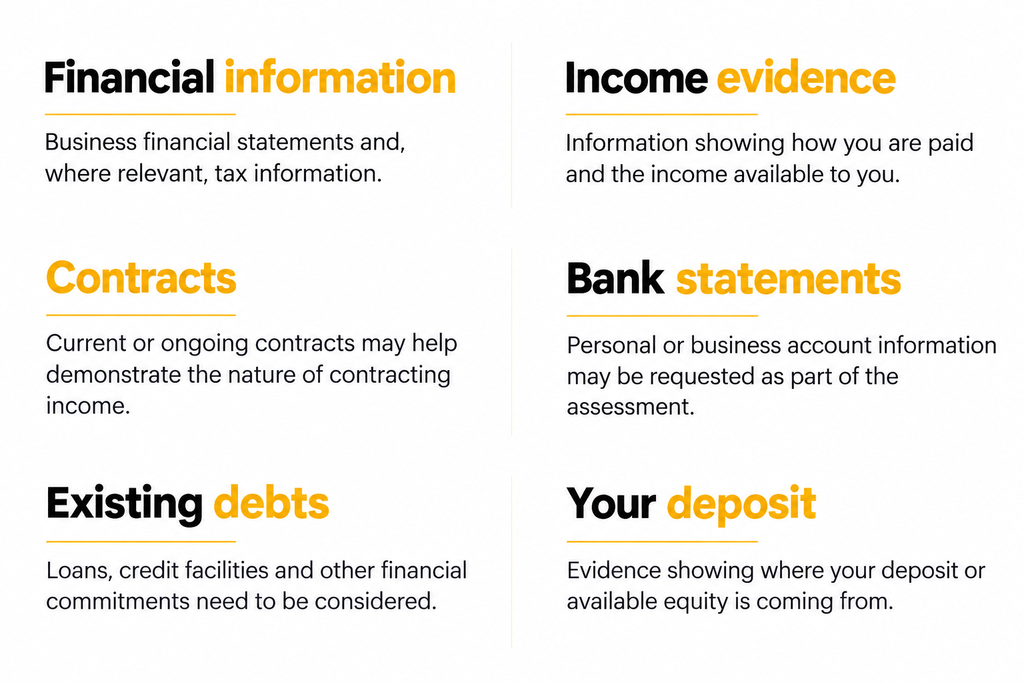

What if your income changes from month to month?
Variable income is common for contractors and business owners. A busy month might look very different from a quiet month. The important question is not simply whether every month looks identical, but whether there is enough evidence for the lender to assess the income it is relying on.
Your trading history, type of work, current contracts, industry experience and financial information can all form part of that wider story. Different lenders can also have different requirements, which is one reason it can help to understand your options before submitting an application.

Does being self-employed mean you need a non-bank lender?
No. Being self-employed, contracting or owning a business does not automatically mean you cannot obtain lending from a mainstream bank. The important issue is whether your circumstances meet that lender’s criteria and whether the required evidence can support the application.
There can also be situations where another lender’s assessment approach is more suitable. The goal should not be to assume one type of lender is required before your circumstances have been properly reviewed.
What if you’ve only recently started contracting or running a business?
This can require a closer look. A shorter trading history may mean there is less historical information available for the lender to assess. Previous experience in the same industry, the strength and duration of current contracts, the structure of the business and other supporting evidence may become particularly relevant.
There is no single answer that applies to every applicant, so it is worth checking lender requirements rather than assuming you need to wait a particular length of time

How can you prepare before applying?
- Keep your business accounts and financial records up to date.
- Make it easy to distinguish business transactions from personal spending.
- Know your current loans, credit limits and other financial commitments.
- Keep relevant contracts and income evidence organised.
- Be ready to explain significant changes in income or business performance.
- Have clear evidence of your deposit, savings or available equity.
- Speak with your accountant where updated financial information is required.
How can a mortgage adviser help?
For contractors and business owners, a mortgage application can be as much about presenting the financial picture clearly as it is about finding an interest rate. A mortgage adviser can help you understand what information may be required, consider lender options and prepare an application that reflects how you actually earn your income.
If your finances do not look like a standard salary and payslip, that is exactly why it can be useful to discuss your position before applying.

