


Being self-employed does not stop you from applying for a home loan. The difference is that a lender may need a clearer picture of how your income is earned, how your business is performing and what financial commitments sit behind the numbers.
Self-employed borrowers can absolutely have strong mortgage applications. The key is preparation, clear records and understanding what the lender may need to see.
Why Can a Self-Employed Mortgage Application Look Different?
For an employee, income can often be demonstrated using payslips and employment information. A self-employed person’s income may come through a company, partnership or sole-trader business, and it can vary from one year to another.
Because of this, a lender may need more information to understand the income available to support a mortgage.

1. Get Your Financial Records Ready
One of the best things you can do before applying is make sure your financial records are current and easy to understand.
Depending on your circumstances and the lender, you may be asked for information such as:
- Financial statements
- Income tax returns
- Business bank statements
- Personal bank statements
- Evidence of current business income
- Details of business and personal debts
- Information about your business structure

Simple takeaway: organise the paperwork before the house hunt becomes serious.
2. Understand the Income a Lender May Use
The money coming into your business is not automatically the same as the income a lender may use for your mortgage assessment.
Your business may have strong sales, but it also has operating costs. The lender may need to understand what remains after relevant expenses and how that income is available to you.
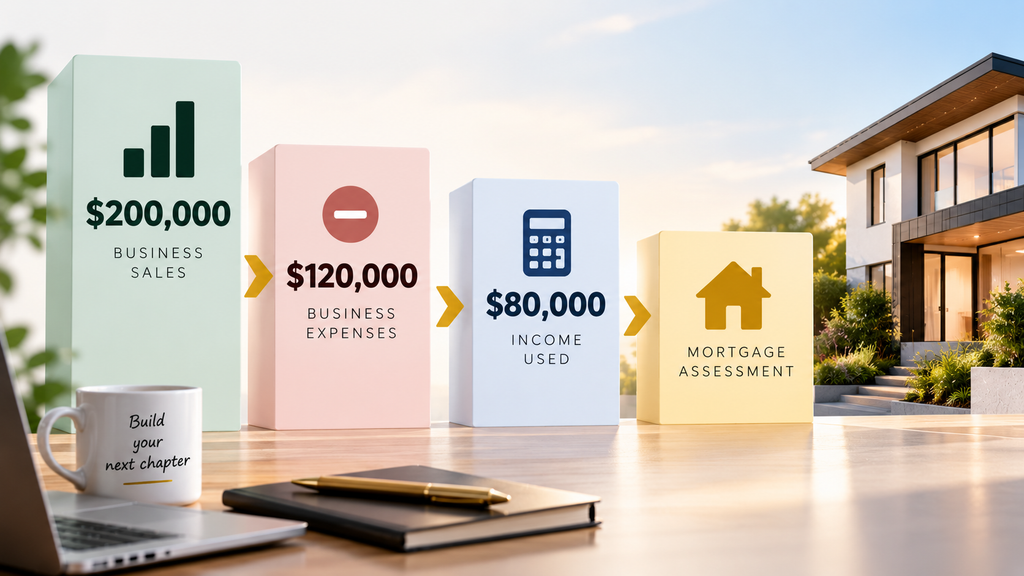
This can become more complex if you pay yourself a salary, receive drawings, retain earnings in the business or have income that changes considerably from year to year.
3. Remember That the Lender Sees the Whole Business Picture
A business owner may naturally focus on turnover or sales. A lender has to look deeper. Income, expenses, debt, tax obligations and the source of your deposit can all form part of the assessment.

4. Keep Business and Personal Finances Clear
Clear financial records make it easier to understand both the business and your personal position. Where practical, keeping personal spending separate from business transactions can help make the financial picture easier to explain.
This can also make conversations with your accountant and mortgage adviser more straightforward.
5. Be Ready to Explain Changes in Income
Self-employed income does not always move in a straight line. One year may be stronger than another, and there can be perfectly reasonable explanations for that.
You may have invested in equipment, taken on staff, lost or gained a major customer, changed the structure of the business or had an unusual one-off expense. If the numbers changed significantly, be ready to explain why and provide supporting information where needed.
6. Review Existing Debt and Credit Facilities
Car finance, personal loans, credit cards and other commitments can affect affordability. Business debts may also need to be considered depending on their structure and your responsibility for them.
Credit limits can matter too. A card with a low or zero balance may still represent an available facility that forms part of the lender’s assessment.
Know what you owe
Have a clear list of your personal and business debts, balances and regular repayments.
Review unused facilities
Understand which credit limits you genuinely need before the application is submitted.
7. Build and Protect Your Deposit
Your deposit remains an important part of a mortgage application. The amount required can depend on the lender, property and your individual circumstances.
For self-employed applicants, the source of the deposit can also matter. If you plan to withdraw a significant amount from the business, the lender may want to understand whether doing so will affect the business’s ability to continue operating normally.
8. Keep Your Tax Position Organised
Tax records can be especially important when income is being assessed through a business. Make sure your records are organised and understand whether there are any outstanding tax obligations or payment arrangements.
If something unusual exists, it is better to identify it early rather than when the mortgage application is already underway.
9. Think Carefully About Major Business Changes
Changing from a sole trader to a company, taking on a new partner, significantly changing how you pay yourself, buying another business or moving into a different industry can all create additional questions for a lender.
These changes do not automatically prevent you from borrowing, but the lender may need more information to understand the new position and whether the income is sustainable.
10. Watch Your Personal Spending Too
Lenders do not only look at the business. Your normal household costs, subscriptions, childcare, insurance, debt repayments and discretionary spending can all contribute to the affordability assessment.
The goal is not to create an unrealistic temporary lifestyle. It is to understand your genuine expenses and make sure unnecessary commitments are not affecting your position.
11. Talk to Your Accountant Early
Your accountant and mortgage adviser can help in different ways. Your accountant understands your business accounts, tax position and financial structure. Your mortgage adviser can help you understand how lenders may assess that information.
Speaking to both before you find the property can give you more time to identify anything that may need attention.
12. Do Not Assume Every Lender Will Assess You the Same Way
Different lenders can have different requirements for self-employed income, business history, supporting documents and affordability.
That does not mean sending the same application everywhere. A better approach is to understand your financial position first and consider which lending criteria may be appropriate for your circumstances.
Self-Employed Mortgage Preparation Checklist
- Are my latest accounts and tax records ready?
- Can I clearly explain how I earn my income?
- Do I know my personal and business debts?
- Are there any unnecessary credit limits?
- Do I understand my normal living expenses?
- Do I know how much deposit I have available?
- Will using business funds for the deposit affect the business?
- Have there been major changes in the business recently?
- Can I clearly explain those changes?
- Have I spoken with my accountant and mortgage adviser?
What If You Have Only Recently Become Self-Employed?
A shorter trading history can make an application more complex because there may be less historical financial information available. However, the options available can depend on your industry experience, business performance, supporting evidence and individual lender requirements.
Rather than assuming you need to wait a fixed number of years, it may be worth having your situation reviewed.
Frequently Asked Questions
Can a self-employed person get a mortgage in New Zealand?
Yes. Being self-employed does not automatically prevent you from getting a home loan. The lender will generally need enough information to assess your income, expenses, debts and ability to service the proposed lending.
How many years of accounts do I need?
There is no single answer that applies to every borrower or every lender. Requirements can vary according to the lender, how long you have been trading, your business structure and the supporting information available.
Do lenders use business turnover as my income?
Not necessarily. Business turnover and income available to you are different things. The lender may need to consider business expenses and other financial information when determining the income it can use.
Can I use money from my business for my house deposit?
Potentially. The lender may want to understand the source of the funds and whether withdrawing them could affect the business.
What if my income increased significantly this year?
The lender may want to understand why the income increased and whether the higher level is likely to continue. Supporting information can therefore be important.
Should I wait until I find a house before speaking to a mortgage adviser?
No. For a self-employed applicant, an earlier conversation can be useful because it gives you time to organize documents and identify potential issues before you are working toward a purchase deadline.
Self-employed and thinking about buying a home?
Preparing early can give you a clearer picture of what a lender may need and what options may be available for your situation.

