
A practical guide to understanding where your money goes, planning for real-life expenses and building a budget you can actually keep using.
Creating a budget sounds simple: write down what you earn, subtract what you spend, and save whatever is left. But real life rarely works that neatly.
The grocery bill changes. The car needs servicing. A birthday comes up. An annual insurance bill arrives. You spend a little more than expected over the weekend, and suddenly the budget you carefully created at the beginning of the month no longer matches reality.
That doesn’t mean budgeting doesn’t work. It usually means the budget needs to be more realistic.
A good budget should help you understand where your money is going, prepare for expenses before they arrive, and make progress towards your financial goals. It should also leave enough flexibility for you to enjoy your life.
1. Start With What You’re Actually Spending
Before deciding what you should spend, find out what you’re spending now. Look through a few months of bank and credit-card transactions so you get a realistic picture rather than judging your finances from one unusually good or bad month.
Group your spending into categories such as housing, groceries, utilities, transport, insurance, debt repayments, subscriptions, eating out, shopping, entertainment, children and education, and savings.
You may find expenses you barely notice. A small subscription, regular takeaway meals, coffees and impulse purchases can add up surprisingly quickly. The goal isn’t to feel guilty about spending money. It’s to understand where it is going.
You can’t create a realistic budget until you know your real starting point.
2. Work Out Your Real Take-Home Income
Build your budget around the money that actually reaches your bank account.
If you receive a regular salary or wage, this can be straightforward. If your income changes because you’re self-employed, contracting, working different hours or earning commissions, consider using a more conservative amount that you can reasonably expect.
When income is higher than expected, the additional money can then be considered separately for savings, debt reduction or another financial goal rather than automatically becoming extra spending.
3. Separate Essentials From Wants
Not every expense has the same priority. Essentials may include rent or mortgage payments, basic groceries, electricity, insurance, transport and minimum debt repayments.
Then there are areas where you have more flexibility: eating out, entertainment, clothing, hobbies, subscriptions and other lifestyle spending. A workable budget doesn’t need to remove everything enjoyable. Instead, decide how much you can reasonably spend while still meeting your commitments and goals.

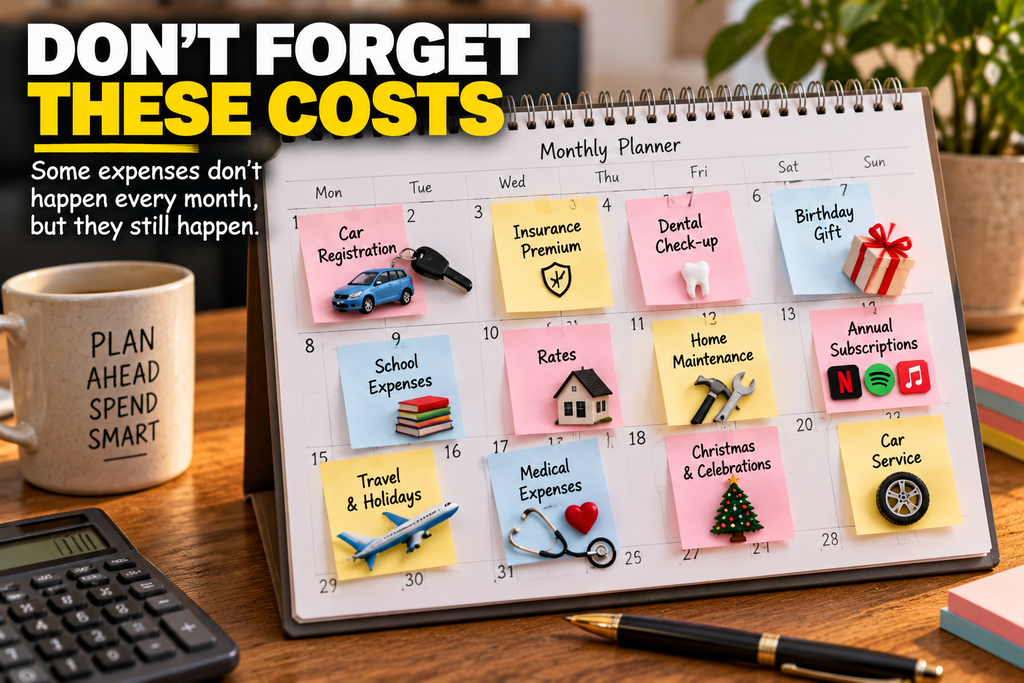
4. Don’t Forget the Expenses That Don’t Arrive Every Month
Some expenses don’t happen weekly or monthly, but they still happen. Think about car registration and servicing, insurance premiums, birthdays, Christmas, school costs, medical and dental expenses, home maintenance, annual subscriptions, travel and holidays.
Instead of treating these as surprises, estimate what you may need over the year and gradually put money aside.
Example: If an annual expense is likely to cost around $1,200, setting aside about $100 each month could make it much easier to manage when the bill arrives.
5. Give Your Money a Job
Once you understand your income and spending, decide where you want your money to go.
Income → Essentials → Financial Commitments → Savings & Goals → Lifestyle → Buffer
You don’t necessarily need dozens of categories or a complicated spreadsheet. Percentage-based systems can be useful starting points, but they won’t suit every household. Housing costs, family size, income, transport requirements and existing commitments can all be different.
Ask yourself: Can I realistically live within this budget while still making progress towards the things that matter to me?
6. Put Savings Into Your Budget — Not at the End
A common approach is to pay for everything first and save whatever is left. The problem is that there often isn’t much left.
Instead, consider making savings one of your regular budget categories. Depending on your goals, this could include:
Emergency fund
First-home deposit
Home maintenance
Education
Investments or long-term goals
Additional mortgage repayments
A realistic amount you can save consistently may be more useful than an ambitious target you struggle to maintain.
7. Build Some Breathing Room Into Your Budget
A budget that allocates every single dollar can look fantastic on paper, but real life has a habit of ignoring spreadsheets. Electricity may be higher than expected, petrol costs can change, or a small repair can suddenly appear.
A small buffer can help absorb ordinary variations. This is different from an emergency fund, which is generally intended for larger unexpected financial events.