


A simple framework for understanding where your money goes — and how to adapt your budget to your income, household expenses and financial goals.
Managing your money can sometimes feel more complicated than it needs to be.
There are bills to pay, groceries to buy, subscriptions to remember, savings goals to work towards and, hopefully, a little money left over to enjoy life.
That is where the 50/30/20 budget rule can be useful.
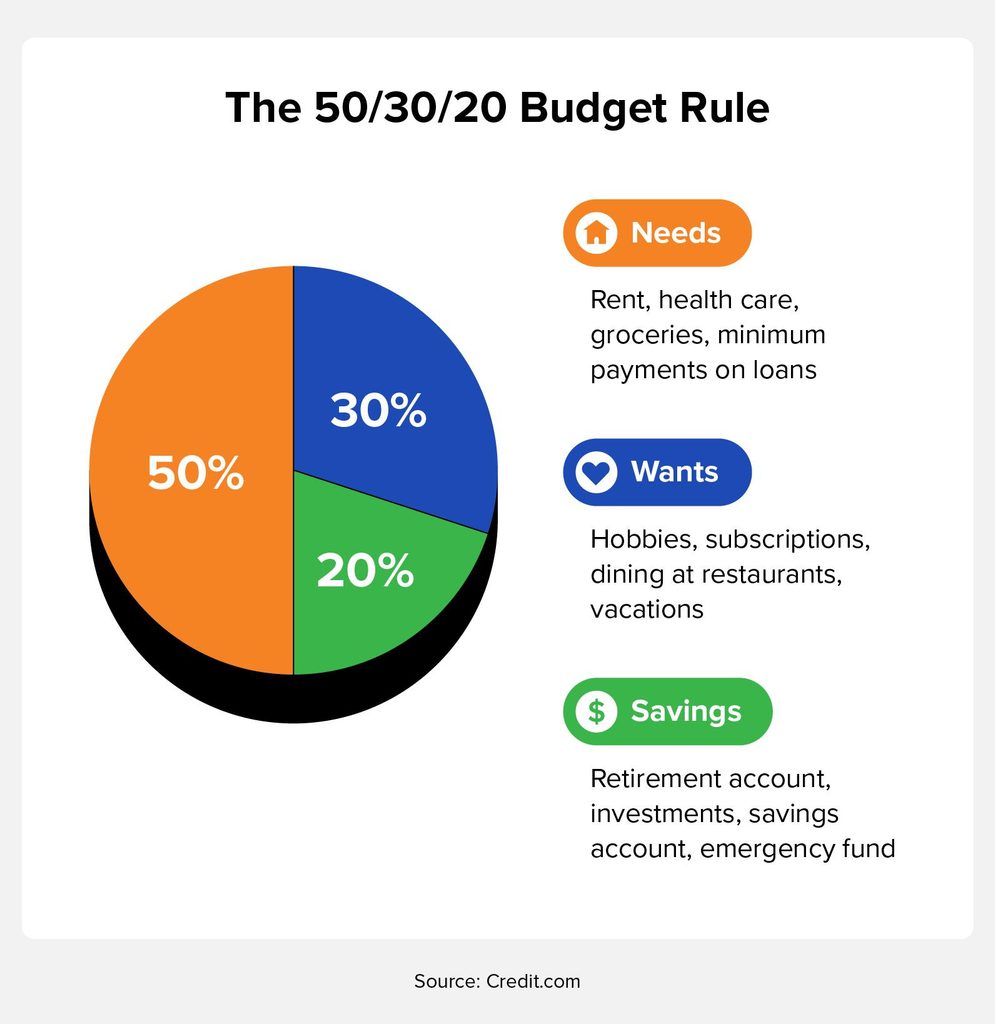
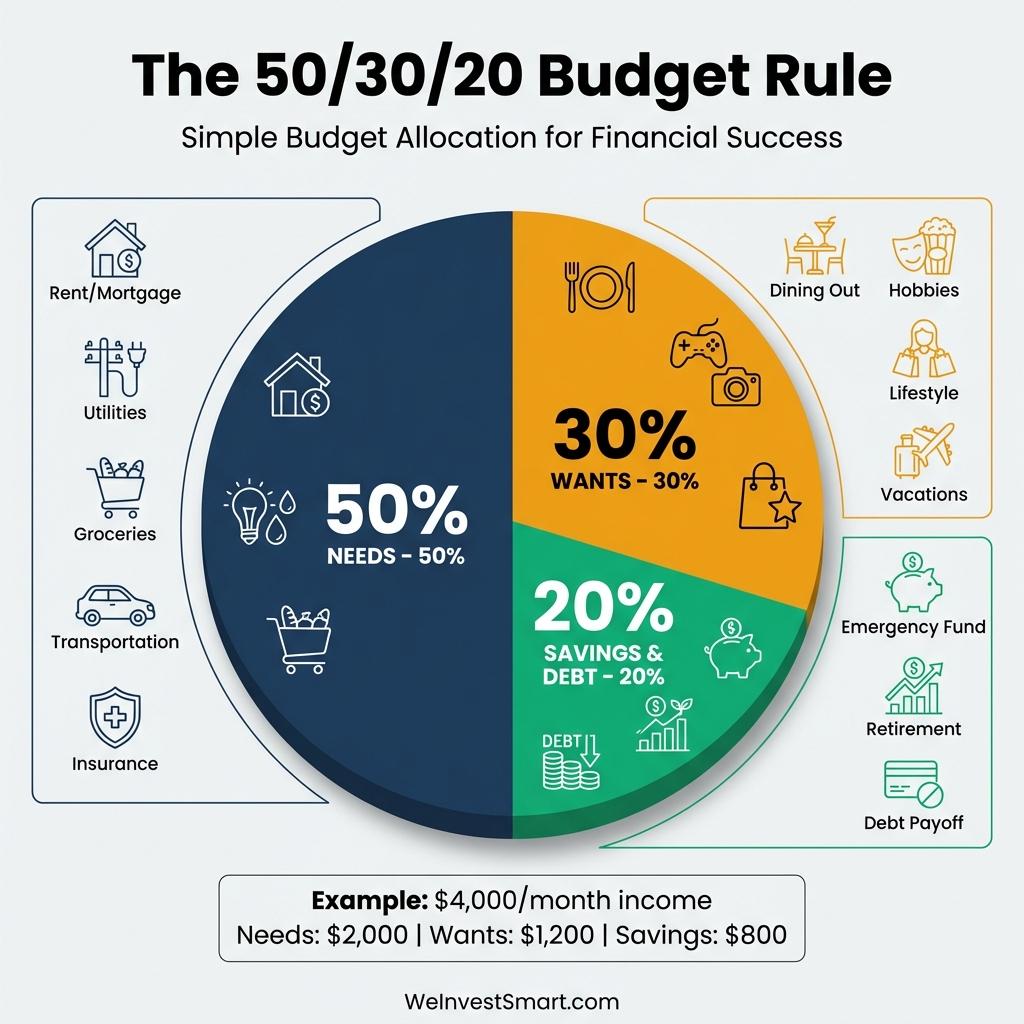
The idea is simple: divide your take-home income into three broad categories — 50% for needs, 30% for wants, and 20% for savings and financial goals.
It gives you a straightforward framework for deciding where your money should go without requiring you to track every single purchase across dozens of categories.
But does the 50/30/20 rule actually work for everyone?
Not necessarily.
The value of the rule is not in following the percentages perfectly. It is in giving you a starting point that you can adjust to suit your income, household expenses and financial goals.
Let’s take a closer look.
What Is the 50/30/20 Budget Rule?
The 50/30/20 budget rule divides your take-home income into three main areas:
50% Needs — Essential Expenses
This category covers essential expenses and financial commitments that you generally need to pay.
30% Wants — Lifestyle Spending
This category covers spending that makes life enjoyable but is usually more flexible.
20% Savings & Financial Goals
This portion is directed towards savings, debt reduction and longer-term financial goals.
| Category | Percentage | Example |
|---|---|---|
| Needs | 50% | $3,000 |
| Wants | 30% | $1,800 |
| Savings & goals | 20% | $1,200 |
| Total | 100% | $6,000 |
This does not mean you have to spend exactly these amounts.
Think of the 50/30/20 rule as a framework rather than a strict rule.
50% Needs: What Counts as an Essential Expense?
The first part of the 50/30/20 rule covers the expenses you generally need to pay to keep your household running.
Depending on your circumstances, this could include:
- Mortgage or rent payments
- Basic groceries
- Electricity and essential utilities
- Necessary transport costs
- Insurance
- Essential medical expenses
- Childcare
- Minimum debt repayments
- Other essential household costs
What About Your Mortgage?
For most household budgets, your regular mortgage repayment would be considered part of your essential housing costs.
However, that does not mean your mortgage has to fit neatly inside the 50% category.
Housing costs can vary significantly between households, particularly in New Zealand, and this is one of the reasons the 50/30/20 rule should be treated as a guide rather than a requirement.
If your mortgage and other essential expenses already use more than 50% of your income, you are not automatically doing something wrong.
30% Wants: What Counts as Lifestyle Spending?
The next 30% is for the things you want rather than strictly need.
This might include:
- Eating out
- Takeaway
- Entertainment
- Holidays
- Hobbies
- Shopping
- Streaming services
- Gym memberships
- Social activities
- Technology upgrades
- Other lifestyle spending
The word “wants” does not mean these expenses are unnecessary or irresponsible.
Life is not just about paying bills and saving money. Having some room in your budget to enjoy your income can actually make your financial plan easier to maintain over the long term.
The important part is knowing the difference between something you need and something you choose to spend money on.
20% Savings: Building Your Financial Future
The final 20% is where your future financial goals come into the picture.
This money could potentially be used for:
- Building an emergency fund
- Saving for a house deposit
- Paying down high-interest debt
- Making additional mortgage repayments
- Investing
- Saving for education
- Future home maintenance
- Holidays
- Other long-term financial goals
You do not necessarily need to put the entire 20% into one place. The important thing is that this portion of your income has a purpose beyond today’s spending.
Does the 50/30/20 Rule Work for Everyone?
This is where it is important not to take the rule too literally.
The cost of living is not the same for everyone.
A single person renting an apartment will have a very different budget from a family with children and a mortgage.
Someone with a high income may be able to save considerably more than 20%. Someone dealing with high housing costs or significant debt may struggle to save 20% at all.
And that is okay.
The 50/30/20 rule is best viewed as a starting point for organising your money, not a test of whether you are financially successful.
What If Your Needs Are More Than 50%?
For many households, essential expenses can already take up more than half of their income.
If your needs are 60% of your income, for example, you could adjust the rest of the framework.
60% Needs → 20% Wants → 20% Savings
Or perhaps:
60% Needs → 25% Wants → 15% Savings
There is no one magic combination.
Does your budget allow you to meet your essential commitments while still making progress towards your financial goals?
What If You Cannot Save 20%?
Do not let the 20% figure discourage you.
If you are currently able to save only 5% or 10%, that does not mean budgeting is not working.
Starting with a realistic amount is often better than setting an unrealistic target and repeatedly giving up.
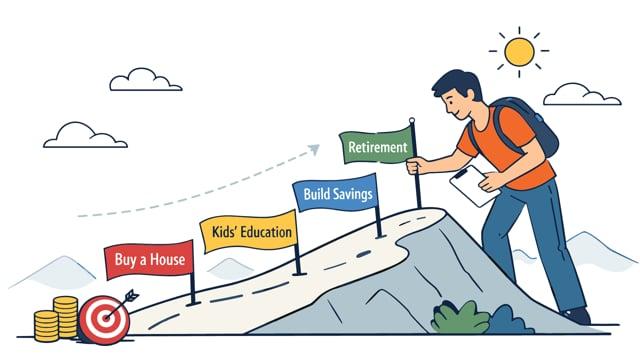
For example, you might start by saving 5% of your income. Later, you could increase that to 10%, then perhaps 15%.
When your income increases or a major debt is paid off, you may be able to save even more.
Progress is more important than perfection.
What If You Want to Save More Than 20%?
You absolutely can.
The 50/30/20 rule is not telling you that you should not save more.
If you are working towards a major financial goal, you may deliberately choose to reduce your wants and increase your savings.
50% Needs + 20% Wants + 30% Savings could be a better structure for someone aggressively saving for a first-home deposit.
Someone else might choose 50% Needs + 15% Wants + 35% Savings if their financial circumstances allow it.
Where Do Irregular Expenses Fit?
One of the weaknesses of any simple budgeting rule is that not every expense happens every month.
Think about:
- Car registration
- Annual insurance
- Car servicing
- Christmas
- Birthdays
- School costs
- Medical expenses
- Home maintenance
- Holidays
A useful approach is to estimate your annual cost and divide it into smaller monthly amounts.
For example, if you expect your car-related annual costs to be around $1,200, you could set aside approximately $100 per month.
How Can the 50/30/20 Rule Help You Save for a First Home?
This budgeting method can be particularly useful if buying a home is one of your financial goals.
Your 20% savings category could become the place where you build your deposit.
At the same time, reviewing your 30% wants category could help you identify areas where you may be able to redirect some spending towards your deposit.
For example, if your household regularly spends more than expected on takeaway, shopping and subscriptions, you might decide to redirect part of that money into a dedicated house-deposit account.
Small changes can become meaningful when they are repeated consistently.
However, saving for a deposit is only one part of preparing to buy a home. You will also need to consider your existing debts, income, ongoing expenses and the costs associated with owning a property.
Your personal budget is also not the same as a lender’s affordability assessment. Lenders apply their own lending criteria when assessing a home-loan application.

What About an Existing Mortgage?
The 50/30/20 framework can also be useful once you already own a home.
Your mortgage repayment will generally form part of your essential expenses.
Your savings and financial goals category could include:
- Emergency savings
- Home maintenance
- Additional mortgage repayments
- Other investments
- Longer-term financial goals
If your mortgage rate is changing or your fixed-rate period is coming to an end, reviewing your budget can be particularly useful. It gives you a chance to understand how a different repayment amount could fit into your overall finances.
This can also be a good time to review your broader mortgage position and consider whether your existing lending still suits your circumstances.
Before making additional mortgage repayments, however, check the terms of your particular loan. Depending on the structure of your mortgage, restrictions or costs may apply.
How to Start Using the 50/30/20 Rule
If you want to try the 50/30/20 rule, start with your actual numbers rather than trying to make them fit the rule immediately.
Step 1: Work Out Your Take-Home Income
Use the amount that actually reaches your bank account. If your income changes from month to month, consider using an average based on your recent income rather than relying on your highest-earning month.
Step 2: List Your Essential Expenses
Add up your housing, groceries, utilities, transport, insurance and other essential commitments.
Step 3: Look at Your Flexible Spending
Work out how much you are currently spending on eating out, shopping, entertainment and other wants.
Step 4: Look at Your Savings
How much are you currently putting towards savings, debt reduction or other financial goals?
Step 5: Compare Your Numbers
Now compare your actual numbers with the 50/30/20 guideline.
Do not change everything immediately. Instead, look for the biggest opportunities.

Should You Follow the 50/30/20 Rule Exactly?
No.
And that is probably the most important thing to understand about the 50/30/20 rule.
If you spend 52% on needs one month, that does not mean your budget has failed.
If you save 25% instead of 20%, that is not a problem either.
And if your financial circumstances mean your budget needs to be 65/20/15 for a while, that is okay.
The purpose of a budgeting framework is to help you make better financial decisions, not create another reason to feel guilty about money.
The Real Goal Is Not 50/30/20
The real goal is intentional spending.
You want to know:
Where is my money going?
What do I actually need?
What do I enjoy spending money on?
What am I saving for?
Am I making progress?
The 50/30/20 rule simply gives you an easy structure for answering those questions.
Your percentages may change over time. Your income may change. Your family circumstances may change. Your financial goals may change.
Your budget should change with them.
Frequently Asked Questions
1.Is the 50/30/20 rule based on gross or net income?
The rule is generally applied to take-home income, meaning the money you have available after tax and other deductions.
2.Is a mortgage a need or a want?
Your regular mortgage repayment would generally be treated as an essential housing expense in a household budget.
3.Can I save more than 20%?
Absolutely. The 20% is a guideline, not a maximum. If your circumstances allow you to save more, you can.
4.What if I cannot save 20%?
Start with what is realistic for you. Even a smaller consistent savings habit can be useful, and you can increase it as your circumstances improve.
5.Can I use the 50/30/20 rule to save for a house deposit?
Yes. Saving for a first-home deposit can be one of the financial goals within the 20% category — or you can choose to allocate more than 20% towards it.
6.Does the 50/30/20 rule work for families?
It can provide a useful starting framework, but families often have different expenses and priorities. You may need to adjust the percentages to reflect your circumstances.
7.Is the 50/30/20 rule suitable for New Zealand households?
It can be a useful starting point for New Zealand households, but there is no single budget that works for everyone. Housing costs, household size, income, debt and other expenses can vary significantly
Final Thoughts
The 50/30/20 budget rule is popular because it makes budgeting easier to understand.
You do not need to create dozens of categories.
You do not need to track every coffee forever.
And you do not need to achieve the percentages perfectly.
Instead, use the rule as a starting point:
50% — Take care of your needs.
30% — Allow room to enjoy your life.
20% — Build your financial future.
Then adjust it to fit your reality.
Because the best budget is not the one that looks perfect on paper.
It is the one that helps you live today while building towards tomorrow.
Planning Your Financial Future?
Budgeting is one part of building long-term financial wellbeing. If buying a home, refinancing your mortgage, or reviewing your existing lending is one of your goals, understanding your overall financial position can help you make more informed decisions.
Talk to Mortgage Advisors
0800 93 0000

