

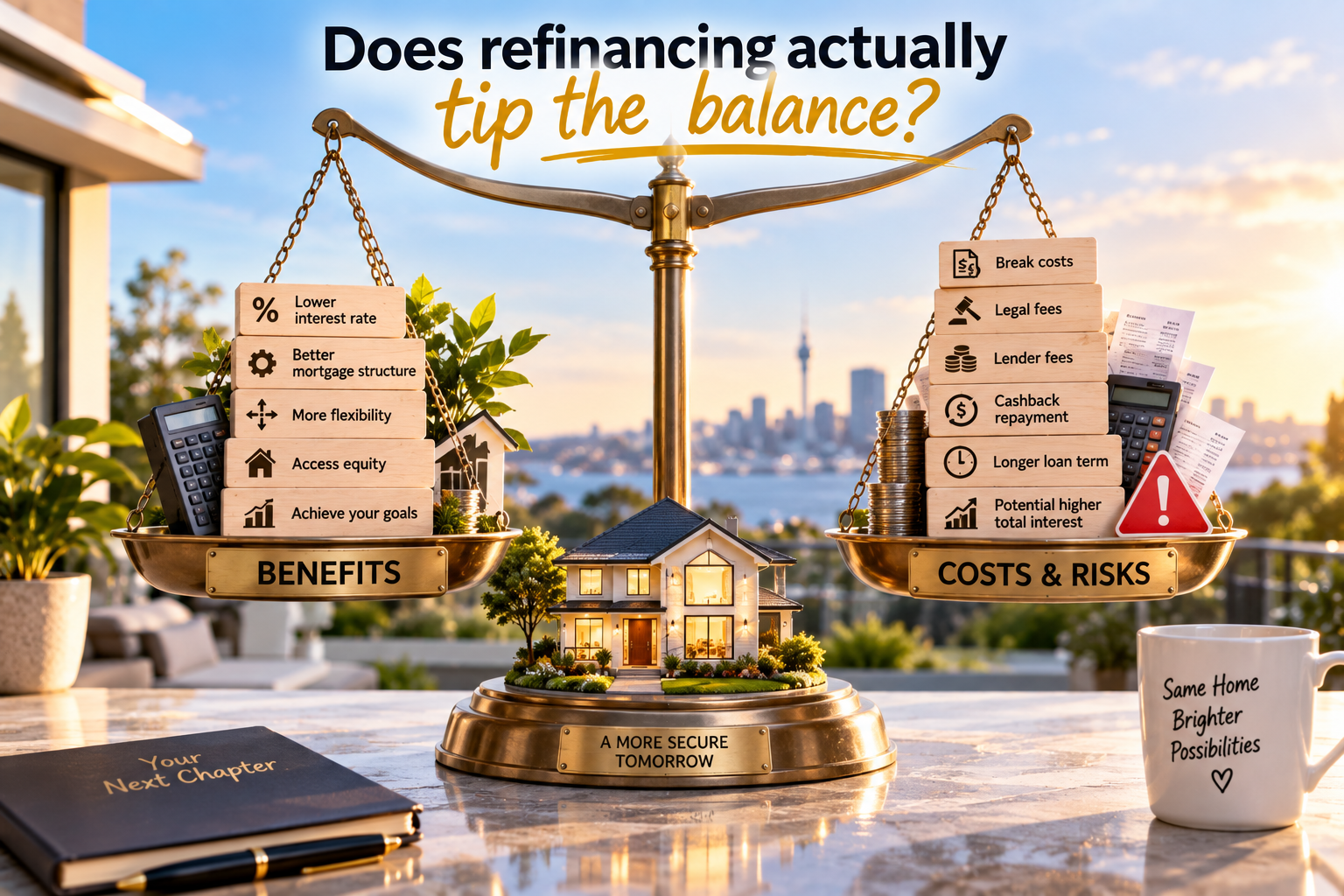
Refinancing your mortgage can sound simple: find a better home loan, move your mortgage and potentially save money. But the real calculation is more complicated.
A lower interest rate may reduce interest costs. A different mortgage structure might give you more flexibility. Refinancing may also provide an opportunity to consolidate eligible debts or access available equity.
At the same time, changing lenders can involve break costs, legal expenses, fees and cashback repayment obligations. A refinance that reduces monthly repayments could even increase your total interest cost if the loan term is extended.
The key question: After considering the benefits, costs and risks, does refinancing leave you in a better overall financial position?
What Is Mortgage Refinancing?
Mortgage refinancing generally involves replacing your existing home lending with a new lending arrangement. Often, this means moving your mortgage from your current lender to another lender.
For example, imagine you originally borrowed $600,000. Several years later, your balance has reduced and your circumstances have changed. Another lender may offer an interest rate, loan structure or features that appear better suited to your current situation.
If the new lending is approved and you decide to proceed, the existing mortgage can be repaid and replaced by the new arrangement. Refinancing can also change your interest rate, loan term, repayments, fixed and floating portions, available features and—in some cases—the total amount borrowed.
The Potential Benefits of Refinancing
1. A More Competitive Interest Rate
Because mortgages usually involve substantial balances, relatively small differences in interest rates can become meaningful.
On a $500,000 opening balance, a difference of 0.50 percentage points is:
$500,000 × 0.50% = $2,500
This simple calculation illustrates the potential significance of a rate difference. It does not mean the homeowner will automatically save exactly $2,500. Balances change, repayments differ, rates may change again and refinancing can involve additional costs.
2. A Mortgage Structure That Better Suits You
Sometimes the biggest potential benefit is not the interest rate at all. Refinancing can provide an opportunity to reconsider how your mortgage is structured.
Depending on available products and your circumstances, this could involve different combinations of fixed-rate lending, floating lending, revolving credit, offset lending or multiple fixed-term portions.
3. Potentially Lower Regular Repayments
A refinance may sometimes result in lower required repayments because of a lower rate, a different structure or a change to the loan term. This can improve immediate cash flow, but a lower repayment does not automatically mean a cheaper mortgage.
4. Consolidating Eligible Debts
Some homeowners investigate refinancing when they also have credit cards, personal loans or other consumer debt. Eligible debts may potentially be consolidated into home lending, subject to lender approval.
That can reduce the immediate interest rate applying to some debt, but the repayment period matters. Short-term debt that is moved into a mortgage and left there for many years can remain outstanding far longer than originally intended.
5. Accessing Available Equity
Property value
$900,000
Existing mortgage
$500,000
In this simplified example, gross equity is $400,000. That does not mean $400,000 is automatically available to borrow. Additional lending remains subject to lender criteria, affordability and serviceability, applicable loan-to-value requirements and the proposed purpose of the funds.
What Does Mortgage Refinancing Cost?
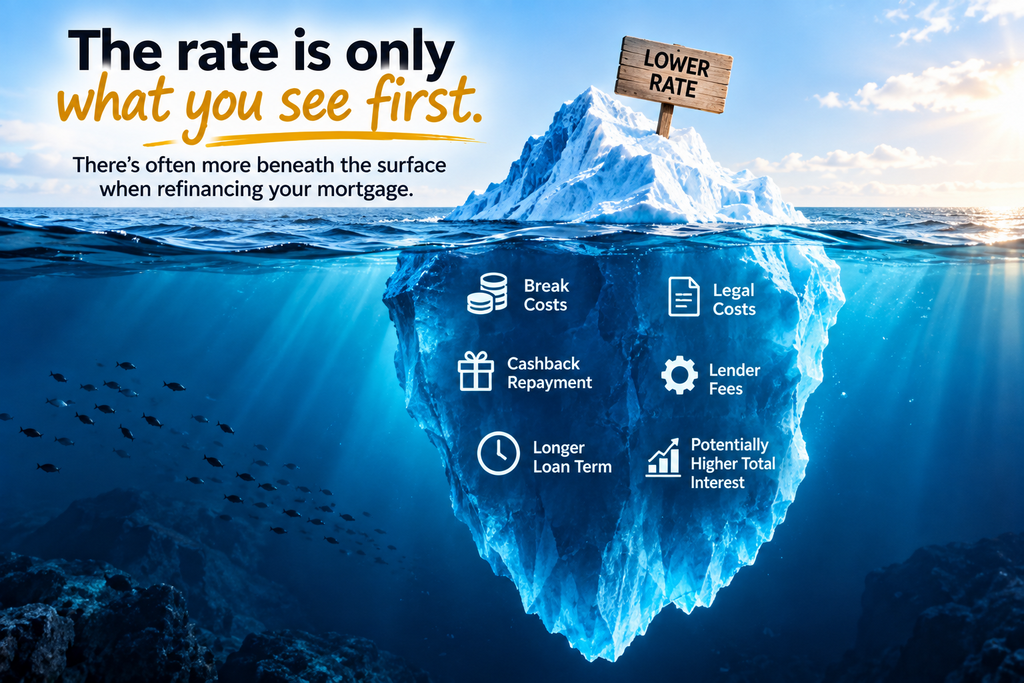
This is the part that can easily be overlooked when an attractive interest rate catches your attention. Changing lenders is not necessarily free.
Break Costs
If part of your mortgage is fixed and you repay or move it before the fixed period ends, your existing lender may charge an early repayment or break cost. The amount can vary, so it is important to understand the potential cost before deciding whether another arrangement is worthwhile.
Legal Costs
Changing mortgage lenders generally involves changes to the security registered against the property, so legal work may be required. Costs vary depending on the transaction and provider.
Discharge and Establishment Fees
There may be costs associated with closing existing lending or establishing new facilities. What matters is the combined switching cost rather than any one individual fee.
Cashback Repayment
If your existing lender previously provided a cash contribution, conditions may have applied. Leaving within a specified period can sometimes require some or all of that contribution to be repaid.
Property Valuation Costs
Depending on the property and application, a lender may require a valuation. If so, an associated cost may apply.

The Real Refinancing Calculation
Imagine a refinance appears likely to reduce mortgage costs by $4,000 over the period you are comparing. But changing lenders involves the following simplified costs:
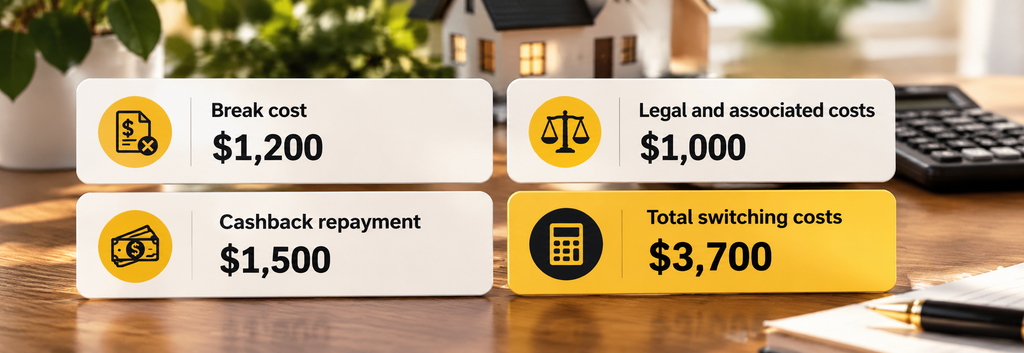
That leaves a potential difference of only $300 before considering other differences between the two arrangements.
Potential savings − Switching costs = a better starting point
Even then, differences in structure, features, loan term and future plans should be considered.
Potential Risks of Mortgage Refinancing
Risk 1: Focusing Only on the Interest Rate
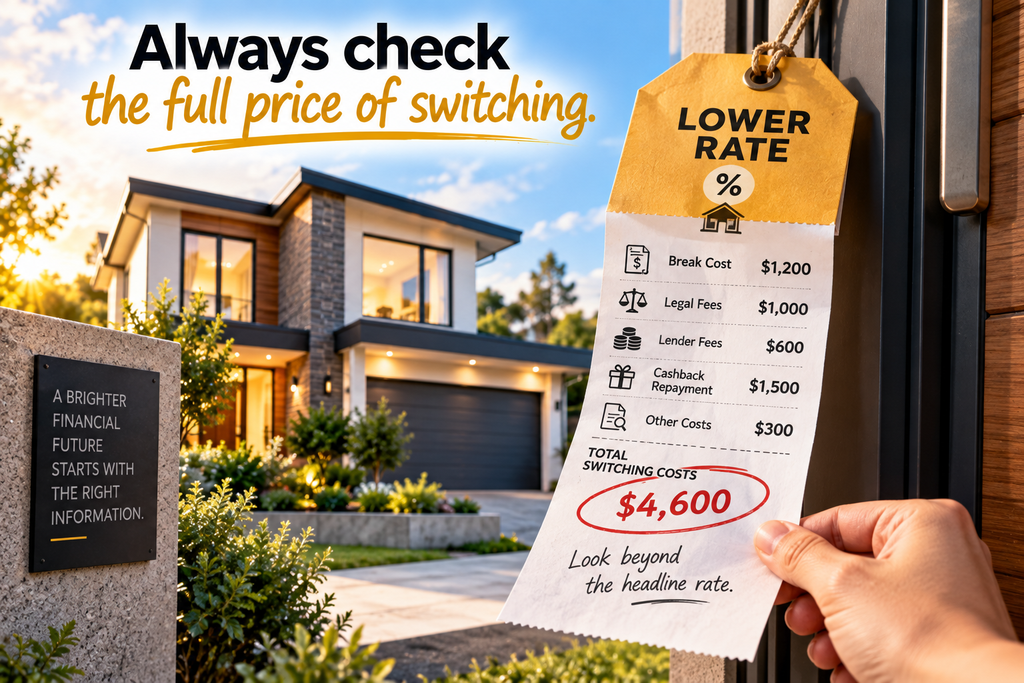
An advertised mortgage rate is easy to compare, but it does not tell you everything. A slightly lower rate may come with switching costs, different features or a structure that does not suit the way you manage money.
Risk 2: Extending Your Mortgage Term
Imagine you have 20 years remaining on your mortgage and refinance the lending over 30 years. Your required repayments may fall, which can feel like an immediate win, but you may now be paying the mortgage for an additional 10 years.

Depending on interest rates and repayments over time, extending the term can increase the total amount of interest paid. Compare the remaining term as well as the new repayment amount.
Risk 3: Turning Short-Term Debt Into Long-Term Debt
A personal loan or credit-card balance that might otherwise be cleared within a few years could remain part of a mortgage for much longer after consolidation. A lower rate can be useful, but the repayment strategy for that portion of debt matters too.
Risk 4: Borrowing More Because Equity Is Available
Equity is not free money. Borrowing against your property increases the debt secured against your home. If you access an additional $80,000, consider not only whether it can be borrowed but what the additional lending will cost and how it will be repaid.
Risk 5: Losing Useful Mortgage Features
Moving solely for a lower rate could mean giving up features that are useful to you, such as a particular offset structure, revolving-credit arrangement or repayment flexibility. Features can have value too.
Risk 6: Refinancing Too Frequently
Repeatedly moving lenders in pursuit of relatively small rate differences can create repeated costs and administration. There may also be conditions attached to lender cash contributions.
Refinancing vs Restructuring
You may not need to change lenders at all. If the main issue is how your mortgage is structured, it may be possible to explore restructuring with your existing lender.
This could involve reviewing fixed and floating portions, different fixed terms, repayment frequency, loan splits or available mortgage features. Staying may avoid some switching costs, while another lender may offer a more suitable solution. Both possibilities can be considered where relevant.
When Might Refinancing Be Worth Investigating?
- Your fixed rate is approaching expiry.
- Your existing arrangement differs materially from available alternatives.
- Your income or overall financial position has improved.
- You have built more equity.
- Your current mortgage structure no longer suits your circumstances.
- You are planning a renovation or another property purchase.
- You need to review expensive consumer debt.
- Your current lender or product no longer suits your needs.
These are reasons to run the numbers—not automatic reasons to refinance.
A Simple Refinancing Checklist
What will I potentially gain?
Consider the proposed rate, repayments, features and mortgage structure.
What will it cost to leave my current lender?
Check potential break costs, legal expenses, lender fees and cashback conditions.
Am I extending the loan?
Compare the remaining term of your current mortgage with the proposed term.
Am I increasing my debt?
If refinancing includes equity release or debt consolidation, understand how much additional home lending is being created.
What features am I gaining or losing?
Do not evaluate the new arrangement solely on its headline interest rate.
How Can a Mortgage Adviser Help?
A mortgage adviser can help you look beyond an advertised rate and compare the wider financial picture. This may include reviewing your existing mortgage balance, fixed-rate expiry dates, potential break costs, available equity, mortgage structure, income and expenses, other debts, future property plans and relevant lender options.
The objective is not simply to find a different bank. It is to understand whether the proposed refinance improves your overall lending position after the costs and risks are considered.
Frequently Asked Questions
Does refinancing always save money?
No. Whether refinancing produces a financial benefit depends on the new arrangement and the costs of changing. A lower advertised rate does not guarantee lower overall costs.
Is there a fee for refinancing a mortgage in New Zealand?
There can be several potential costs rather than one standard refinancing fee. These may include break costs, legal expenses, discharge or establishment fees, valuation costs and repayment of a previous cash contribution.
Can another bank pay my refinancing costs?
Lenders may sometimes offer cash contributions or other incentives, subject to their current offers and eligibility criteria. These should be considered alongside the complete lending arrangement.
Can I refinance a fixed mortgage?
Potentially. However, repaying fixed lending before the end of its fixed period may result in break costs, which should be understood before proceeding.
Can I refinance to pay off credit cards?
Debt consolidation may be possible in some circumstances, subject to lender approval. The repayment period matters because extending short-term debt across a long mortgage term can increase the period over which interest is paid.
Does refinancing restart my mortgage at 30 years?
Not necessarily. The proposed loan term forms part of the new lending arrangement. Extending the term can reduce required repayments but may increase total interest costs.
Can I access equity when refinancing?
Potentially, subject to available equity, serviceability, lender criteria, applicable loan-to-value requirements and the proposed use of the funds.
Related Mortgage Guides
Should You Refinance Your Mortgage?
When Is the Right Time to Refinance?
What Happens When Your Fixed Mortgage Rate Expires?
How to Choose the Right Mortgage Structure
Fixed vs Variable Mortgage Rates: Pros, Cons and When Each Makes Sense
How Mortgage Overpayments Can Save You Interest
Thinking About Refinancing?
A lower mortgage rate can be attractive, but it is only one part of the decision. Mortgage Advisors can help you review your existing lending, compare suitable options and understand the potential costs and trade-offs before you decide whether to refinance.

