


Buying a home usually starts long before the first open home. It starts with the way you manage your income, handle debt and save for the future.
A deposit matters, but it is only one part of the picture. You also need room in your budget for repayments, everyday expenses and the unexpected costs that come with owning a property. A larger deposit is less reassuring if the purchase leaves you without a financial buffer.
If you want to improve your financial position before buying a home, focus on building a stronger financial foundation. The same habits that support mortgage preparation can also help you build wealth over time: spending intentionally, reducing expensive debt, growing savings and protecting your income.
This guide explains practical steps for New Zealand buyers, whether your purchase is months away or still a longer-term goal.
1. Understand your financial starting point
Before deciding how much house you want, work out what your current finances can support.
Write down your income after tax, regular expenses, savings and outstanding debts. Include credit cards, vehicle finance, personal loans, student loan repayments and buy now, pay later commitments. Record both balances and required payments.
Review your actual transactions rather than relying on memory. Groceries, fuel, takeaways, subscriptions and small purchases can look quite different when added together. Include annual costs such as insurance renewals and vehicle servicing by setting aside an allowance each payday.
Track cash flow and net worth separately
Cash flow is the money coming in and going out. Net worth is the value of what you own minus what you owe.
You can have a good income but little money left each month. Equally, you may have investments or KiwiSaver savings that are not immediately available for bills. Track accessible cash separately from retirement savings and other assets.
Understanding both measures helps you set priorities. Your first step might be reducing repayments, creating a buffer or correcting a budget that depends too heavily on overtime.
2. Build a budget that supports your home-buying goal
A useful budget gives your money a job without making ordinary life impossible.
Start with essentials, then allow for flexible spending, debt repayments and savings. Set a deposit contribution you can maintain through normal months, including those with birthdays, school expenses or annual bills.
The 50/30/20 rule can provide a starting framework, but its percentages will not suit every household. High housing costs, dependents or variable income may require a different split. Read our 50/30/20 budget rule guide for a framework you can adapt.
Turn small savings into regular progress
Review unused subscriptions, shopping habits, utilities and transport costs. Avoid cancelling useful protection or essentials simply to make the savings figure look better.
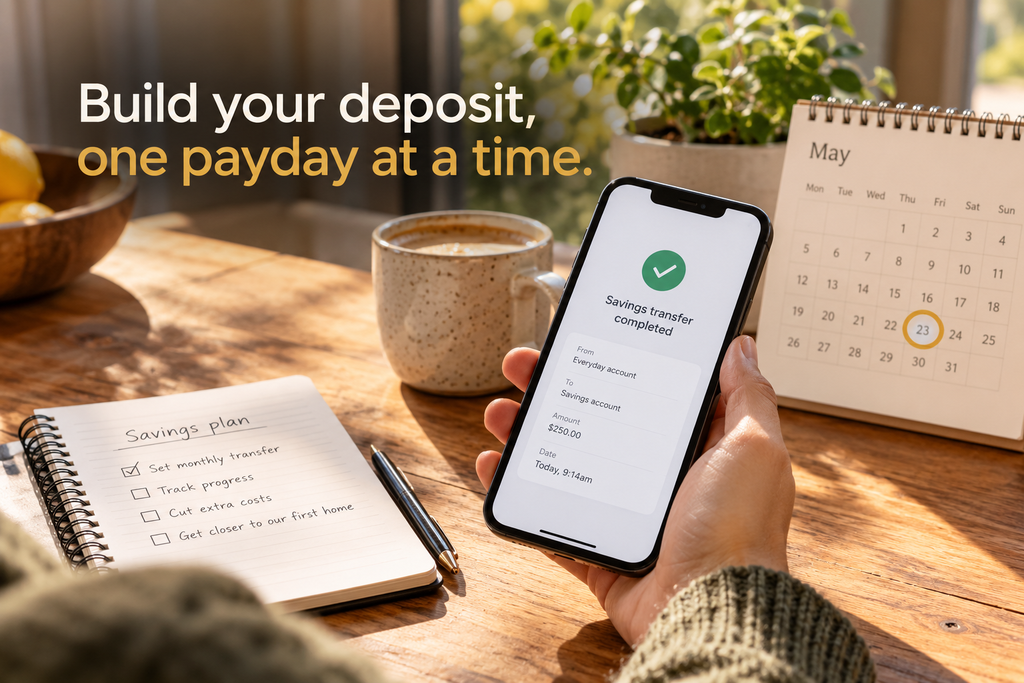
For example, redirecting $75 a week adds $3,900 over 52 weeks, before interest. The benefit comes from making that transfer consistently. Set an automatic payment shortly after payday so the money reaches your savings account before discretionary spending starts.
Our article on reducing household expenses offers another place to start reviewing your spending.

3. Reduce debt that puts pressure on your budget
Existing repayments compete with a future mortgage for the same income. Reducing debt can improve your monthly flexibility and reduce interest costs.
List each debt’s interest rate, minimum payment, remaining term and any repayment fees. Keep required payments up to date while deciding where extra money will have the greatest effect.
One approach prioritises the highest-interest balance. Another clears the smallest balance first to build momentum. Compare the financial cost of each approach and choose a plan you can follow.
Review borrowing commitments before applying
Discuss unused credit limits, overdrafts and buy now, pay later accounts with your broker. Lenders may assess available credit facilities as well as the amount currently borrowed, and their treatment can differ.
Avoid taking on new repayments without considering your home-buying plans. A vehicle upgrade may be useful, but its payment could reduce the money available for housing.
Debt consolidation also needs careful comparison. A smaller payment can result from a longer term rather than a lower total cost. Compare fees, interest and the full repayment period before changing loans.
4. Set a deposit target and save with purpose
A clear target makes saving easier to measure. Start with a realistic property price range and discuss potential deposit requirements with a mortgage broker.
For illustration, a 20% deposit on a $700,000 property is $140,000, while 10% is $70,000. These figures explain the calculation; they are not approval thresholds or confirmation that either loan is available to you.
A larger deposit reduces the amount you need to borrow. Lower-deposit lending may be available in some circumstances, subject to lender criteria and applicable lending restrictions. Reserve Bank loan-to-value and debt-to-income settings affect bank lending, but they do not replace a lender’s individual assessment
Keep your deposit accessible
If you expect to buy soon, consider how much risk your deposit can reasonably bear. Money needed on a fixed timeline is different from money invested for retirement.
A savings account or an appropriately timed term deposit may suit some buyers. Compare access conditions, fees and after-tax interest. Do not lock money away beyond the date you may need it for a purchase.
Check progress monthly and adjust your timeframe if property prices, income or living costs change.
5. Review KiwiSaver before relying on it
KiwiSaver may form part of an eligible first-home buyer’s deposit, but your displayed balance is not automatically your available withdrawal amount.
Inland Revenue states that you must have been in KiwiSaver for at least three years before a first-home withdrawal. You must leave $1,000 in the account, and money transferred from an Australian complying superannuation scheme cannot be withdrawn for this purpose.[2]
Contact your provider early to confirm eligibility, the potential amount and application timing. Tell your solicitor that KiwiSaver is part of your purchase plan so the withdrawal process can be coordinated.
Your investment timeframe also matters. If you plan to use KiwiSaver soon, ask your provider or an appropriately qualified adviser whether your fund’s risk level fits that goal. A growth-oriented fund can fluctuate, including shortly before you need the money.

6. Build an emergency fund alongside your deposit
An emergency fund helps keep an unexpected expense from turning into new debt or disrupting your home purchase.
Start with a manageable buffer and grow it as your circumstances allow. Sorted suggests beginning with $1,000 and working towards three to six months of expenses.[3] Your appropriate amount depends on income stability, dependants, insurance and access to other support.
Keep emergency savings separate from the deposit. Otherwise, it is easy to count the same money twice: once for settlement and again for the financial cushion you expect to have afterwards.
Buying a home can introduce unfamiliar repair costs, so retaining accessible savings after settlement deserves a place in your plan. Our guide to building an emergency fund while paying a mortgage explores this next stage.
7. Prepare clear income records and payment history
Preparing your paperwork early can reveal gaps while you still have time to address them.
Employees can gather payslips and employment details. Self-employed buyers can organise financial accounts, tax information and evidence of business income. Ask your broker which documents are needed for your circumstances; requirements vary between lenders.
If part of your income comes from overtime, bonuses or commissions, discuss how a lender might assess it. Build your own budget around a sustainable income level rather than assuming your best month will repeat.
Address credit issues openly
Check your credit reports and query any errors with the relevant reporting agency. Maintain timely payments and contact a creditor early if a payment becomes difficult.
If you have missed payments, explain what happened, whether the issue has been resolved and what has changed. There is no universal credit score or quick fix that guarantees mortgage approval.
Accurate records and honest explanations give your broker a clearer basis for discussing possible next steps.

8. Budget for the full cost of owning a home
The mortgage payment is only part of your future housing budget.
Allow for rates, insurance, maintenance, utilities and any body corporate or residents’ association charges that apply. Before buying, budget for legal work, property investigations, inspections, possible valuation requirements and moving expenses. Obtain property-specific estimates where possible.[4]
Practise your future housing budget
Estimate your likely total ownership costs and compare them with what you currently spend on housing. If ownership would cost more, try transferring the difference into savings for several months.
This exercise can reveal whether the budget is comfortable or too tight. It also adds to your savings while you prepare.
Test what would happen if repayments rose, income temporarily fell or a significant repair became necessary. Your comfortable purchase range may be below the maximum a lender is willing to consider, and that can be a sensible choice.
9. Connect mortgage preparation with long-term wealth building
Personal finance creates the foundation for wealth building. A regular surplus gives you options: reduce liabilities, accumulate cash, invest appropriately and prepare for major goals.
Paying down debt improves net worth by reducing what you owe. Saving increases your assets. Interest and investment returns can contribute over time, although taxes, fees and losses also affect results.
For example, if you increase savings by $5,000 and reduce debt principal by $3,000, your net worth improves by $8,000, assuming other asset values and liabilities stay unchanged. That progress matters even before you own property.
Treat home ownership as one part of the plan
Mortgage principal repayments can build equity, but interest and ownership expenses are costs. Property values can also fall, and equity cannot always be accessed when needed.
Continue considering retirement savings, suitable insurance and investments beyond the house. The right balance depends on your goals and circumstances.
When you are ready, read how to choose the right mortgage structure to prepare questions about repayment flexibility and loan arrangements.
10. Create a practical 90-day preparation plan
Use the next three months to establish a repeatable routine rather than trying to solve everything at once.
Days 1–30: Review transactions, list debts, check credit reports and prepare a realistic budget. Discuss your intended timeframe with a broker.
Days 31–60: Automate savings, reduce selected expenses and make additional debt repayments where affordable. Confirm KiwiSaver information and start collecting income documents.
Days 61–90: Review progress, practise your ownership budget and identify remaining gaps. Update your deposit target and purchase range with your broker.
Ninety days will not make every buyer mortgage-ready. It can, however, give you clearer information and evidence of habits you can sustain.
Frequently asked questions
Should I pay off debt or save a deposit first?
Consider interest costs, required payments and your emergency buffer together. Expensive debt may deserve priority, while some buyers can save and repay debt at the same time. Ask a broker which changes could help your application most.
Do I need a 20% deposit in New Zealand?
Not in every case. Some buyers may qualify with a smaller deposit, but availability depends on their circumstances, lender criteria and applicable restrictions. A deposit alone does not establish affordability or guarantee approval.
Can I use KiwiSaver to buy my first home?
Eligible buyers may be able to make a first-home withdrawal. Confirm your eligibility and available amount with your provider, including the three-year membership requirement and the money that must remain in your account.[2]
How much should I keep after buying?
Allow for settlement costs, immediate necessities and an accessible emergency buffer. The right amount varies. Avoid using every dollar for the deposit without planning how you would cover an unexpected expense.
Can buying a home help me build wealth?
It can support wealth building through principal repayments and potential changes in property value. However, ownership costs, interest and market risk affect the outcome. A sustainable budget and broader financial plan remain important.
When should I speak with a mortgage broker?
An early conversation can help you understand your starting position, even if you are not ready to apply. A broker can discuss documents, lender requirements and practical preparation steps before you begin making offers.
Speak with a mortgage broker about your next step
You do not need to have everything worked out before asking for guidance.
Mortgage Advisors can help you discuss your deposit, existing commitments, income and home-buying timeframe. Speak with a mortgage broker about what is achievable now and which steps could strengthen your position before applying.
Call 0800 93 0000 or email info@mortgageadvisors.co.nz to start the conversation.

